A cracked tile in a stairwell. A radiator that will not heat on the second floor. A dripping tap in a tenant's kitchen. These are the small things that, left unrecorded, turn into the expensive things. For years the standard method of capturing them has been a notepad, a clipboard during a site walk, or a quick line scribbled at reception. That method fails in predictable ways, and across Scotland's mixed stock of tenements, commercial units, and managed estates, those failures add up.
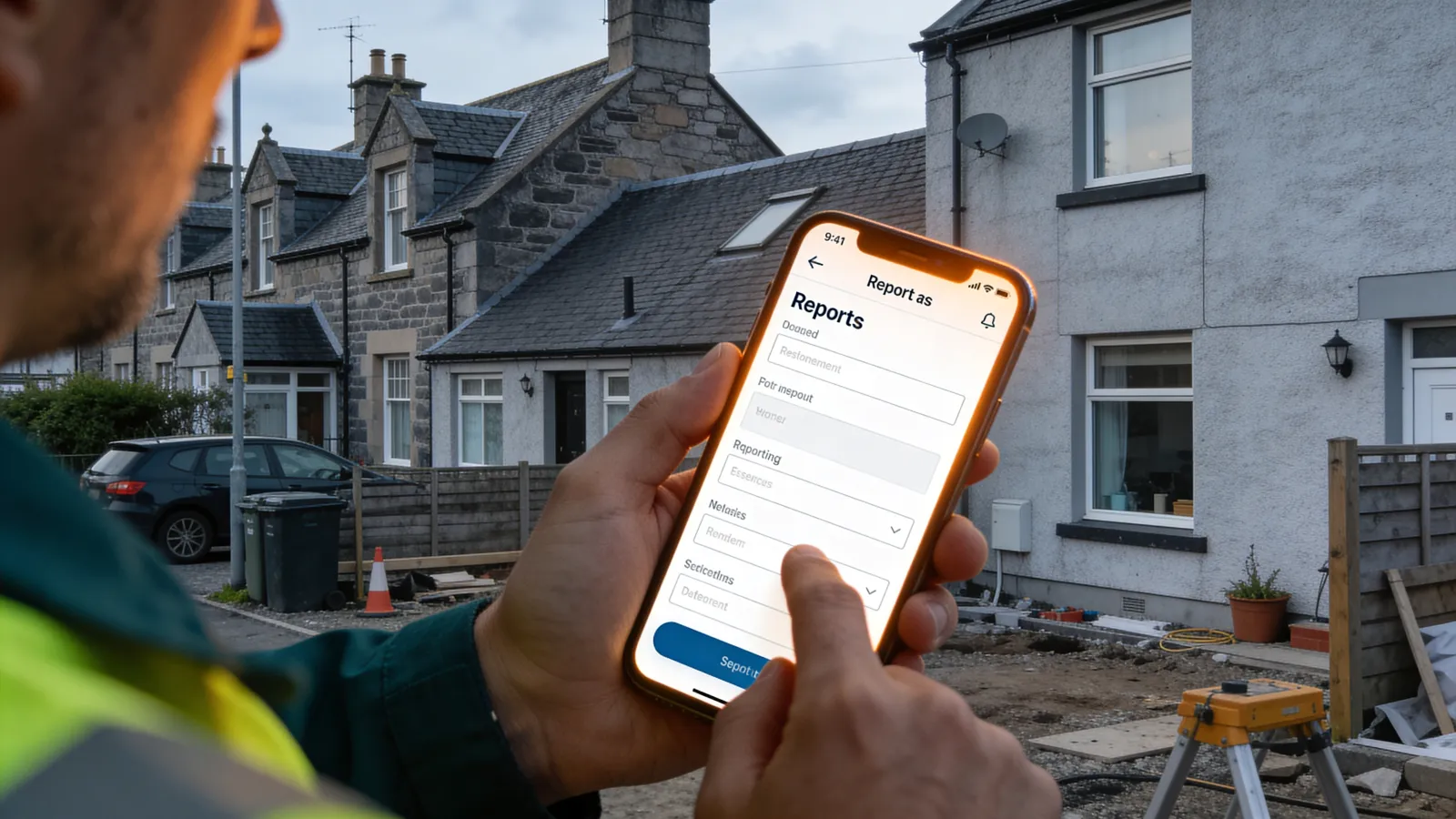
Reporting a property issue from a phone is not about chasing the newest gadget. It is about making sure a problem is recorded once, accurately, with enough detail to act on, and then tracked until it is closed. Here is why the shift matters and how to make it work in practice.
The notepad loses what you cannot afford to lose
A handwritten note captures words. It does not capture the things that actually speed up a repair.
When a contractor reads "leak in flat 3", they still have to call to find out which room, how bad, when it started, and whether the tenant will be home. Each of those questions is a phone call, a delay, and sometimes a wasted visit. A first-time fix rate drops sharply when the person attending arrives without context.
A phone-based report closes those gaps at the point the issue is spotted:
- A photo or short video that shows the actual fault, not a description of it
- The exact location, often with a unit or asset reference attached
- A timestamp, so you know when the problem was first flagged
- The reporter's name and contact, so follow-up questions go to the right person
- A category and rough severity, so urgent jobs are not buried under cosmetic ones
None of that survives reliably on paper. Notes get rained on during an external inspection, left in a van, or transcribed wrongly into a spreadsheet two days later.
Speed and accountability go together
The gap between spotting a problem and logging it is where most issues are lost. If a caretaker has to remember three faults until they get back to the office, one or two will quietly disappear. Reporting on the spot, in under a minute, means the record exists before the distraction does.
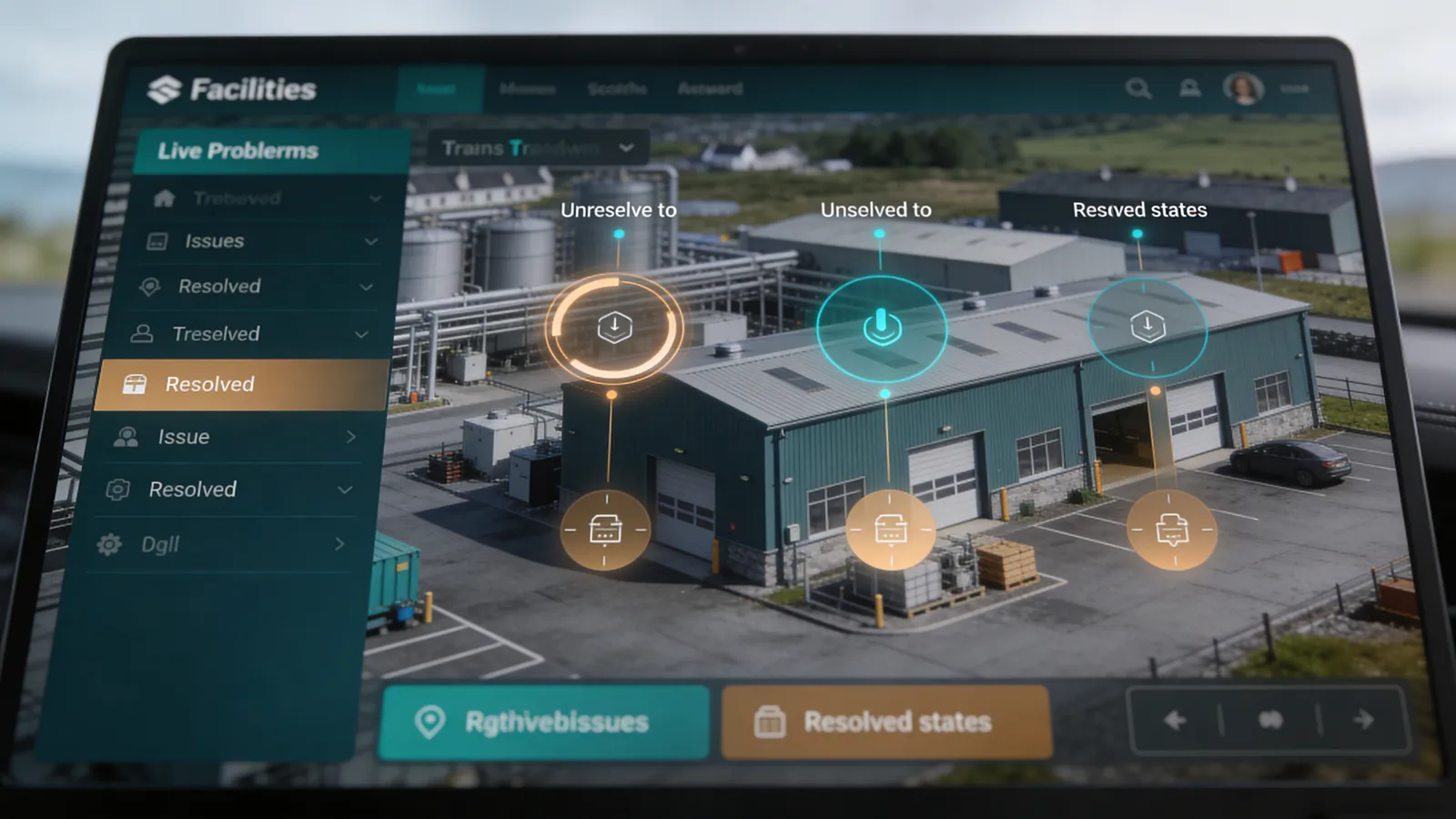
Accountability is the second half. A paper log has no clear owner once it leaves the writer's hand. A digital report has a status: received, assigned, in progress, resolved. Everyone with access can see where a job sits without making a single call. For a factor managing several blocks, or a facilities manager covering multiple commercial sites, that visibility is the difference between a system and a guess.
There is a compliance angle too. Under the Repairing Standard and the wider duties that apply to Scottish letting and factoring, you are expected to act on reported defects within reasonable timeframes and to show that you did. A timestamped, photographed record is far stronger evidence than a line in a notebook when a question arises months later.
What good looks like on the ground
A reporting flow only works if people actually use it, so the bar is simple: it has to be faster than the notepad, not slower.
A sensible setup looks like this. Anyone on site, including tenants and staff, can raise an issue in three or four taps. The form asks only for what matters: location, a photo, a short description, and how urgent it feels. The report lands in one place where it is triaged, assigned to the right trade, and tracked to completion. The person who raised it gets an update when it is resolved, which builds trust and cuts down on the chasing calls.
This is the thinking behind ORVO Group's approach to connected reporting. One channel for every property need means a blocked drain, a flickering light, and a broken access gate all enter the same system and route to the same accountable team, rather than scattering across emails, voicemails, and three different contractors.
A few practical pointers when you set this up:
- Keep the form short. Every extra field is a reason not to bother.
- Make photos the default, not an option. One image saves several questions.
- Triage daily. A report that no one reads is no better than a lost note.
- Close the loop. Tell the reporter when the job is done, every time.
Counting the real cost of paper
It is worth putting numbers to this. Say a small repair takes one wasted visit because the contractor arrived without detail. That is travel time, an hour of labour, and a return trip, often more than the repair itself. Multiply by the dozens of issues a single managed block generates in a year and the waste is real money.
Then there is the slow leak that became a ceiling repair because the note sat in a drawer, or the fire door that stayed propped because no one logged it. The downside of a missed report is rarely the report. It is what the small problem becomes.
A phone is already in everyone's pocket on site. Using it to capture issues properly costs nothing extra in equipment and removes the weakest link in the chain, which is human memory under pressure.
Bringing it together
Moving from notepad to phone is a small change in habit with a large effect on speed, cost, and accountability. You log the issue once, with the detail that matters, and you can prove what happened and when. For property owners, factors, and facilities managers across Scotland, that is the foundation everything else sits on.
If you want a single, accountable way to capture and resolve property issues, take a look at our orvo connect service, or get in touch to talk through how it would fit your buildings.