A site inspection is only as good as the detail it captures. A quick walk-round with a clipboard might tick a box, but it rarely tells you what you actually need to know: what is failing, what is about to fail, and what will cost you more if you ignore it. For commercial property owners, factors and facilities managers across Scotland, a proper inspection is the difference between planned maintenance and an emergency call-out on a Friday afternoon.
Here is what a thorough inspection should cover, and how to use what it finds.
The building fabric and exterior
The outside of a property tells you more than people expect. Scotland's weather is hard on buildings, and wind-driven rain, frost and salt all leave evidence if you know where to look. A good inspector starts at roof level and works down.
- Roof coverings, flashings, valleys and any visible slipped or missing slates or tiles
- Gutters, downpipes and hoppers, checking for blockages, splits and staining on the wall below
- Rendering, pointing and brickwork for cracking, spalling or damp tracking
- Windows, doors and seals, including signs of failed double glazing or rotten frames
- External lighting, signage fixings and anything that could fall in high winds
Standing water, green algae streaks and damp patches are early warnings. A blocked gulley left through one winter can turn into a damaged ceiling and a ruined floor by spring. Catching it during a routine inspection costs a fraction of the repair.
Mechanical, electrical and life safety
This is where inspections protect people, not just the building. You are not replacing a full electrical or gas safety certificate here, but you are confirming that statutory checks are current and that nothing visible has gone wrong since the last one.
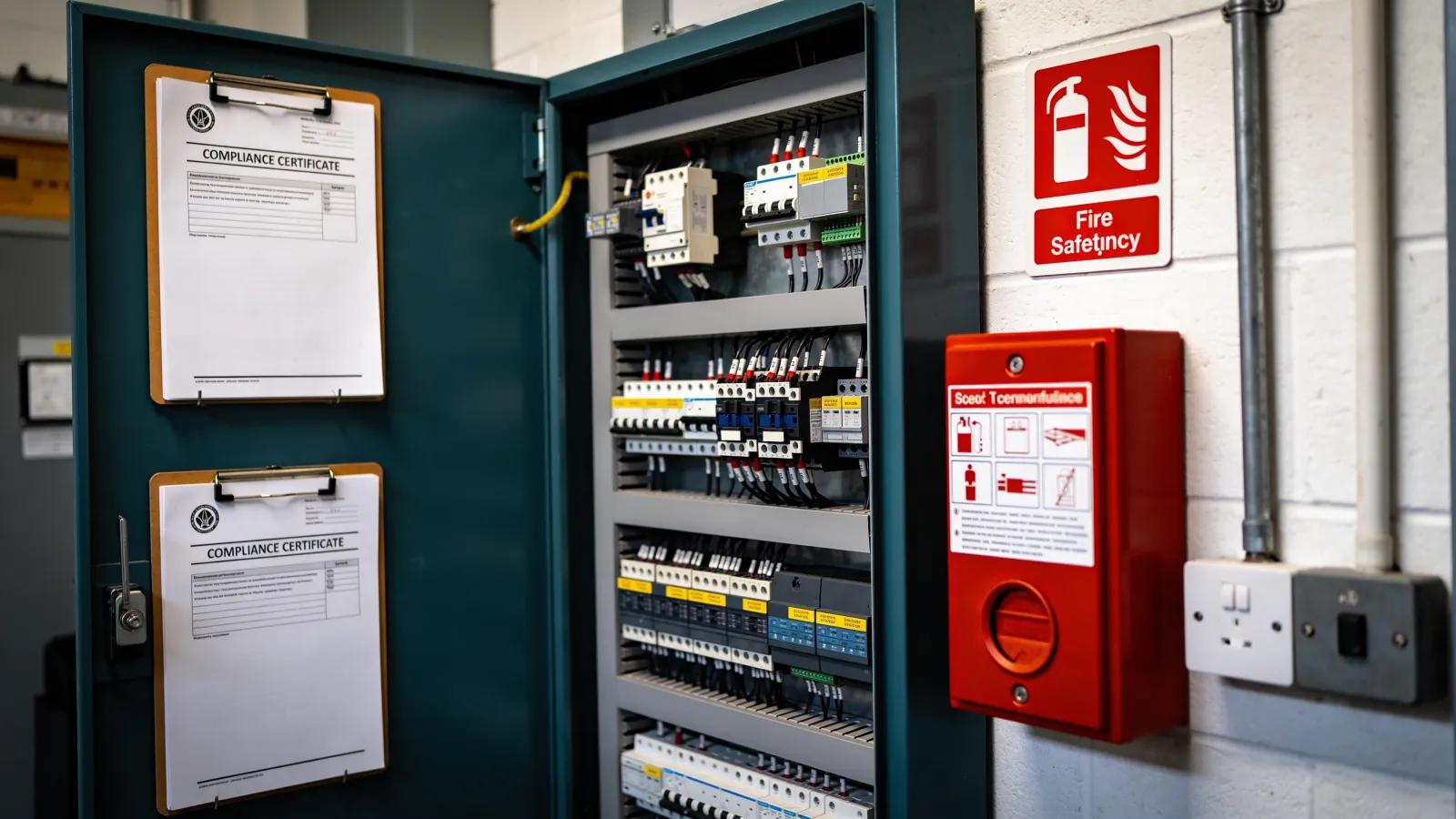
A competent inspector will confirm the dates on fire alarm servicing, emergency lighting tests, fixed wiring inspections (typically every five years for commercial premises) and gas safety records. They will look at distribution boards for scorching or overheating, check that fire doors close properly and are not wedged open, and confirm extinguishers are in date, mounted and unobstructed. Escape routes and final exit doors should be clear and the signage legible.
Heating, ventilation and hot water systems get a visual and functional check: any leaks, unusual noise, error codes, or temperatures that suggest a boiler or pump is struggling. For premises with water storage and a duty under the legionella regulations, the inspector should confirm temperature monitoring and flushing records exist and are being kept.
Internal condition, compliance and accessibility
Inside, the focus moves to the day-to-day fabric and how the building is being used. Floors, ceilings, walls and finishes are checked for damage, trip hazards and wear. Stairwells, handrails and balustrades matter, especially in older Scottish tenement and mixed-use buildings where original features sit alongside modern fit-outs.
The inspector should also note accessibility provision, the condition of welfare facilities, ventilation and any signs of damp or mould, which is now a sharper compliance issue for landlords. Asbestos is a specific point in any building constructed or refurbished before 2000: the inspector should confirm an asbestos register exists and that the management plan is being followed, not disturb anything.
Photographs are essential. A finding written as "minor damp, rear store" means little in six months. A dated photograph with a location and a clear note gives you a record you can act on and compare against next time.
Turning findings into a plan
An inspection that produces a list and nothing else has done half the job. The value comes from prioritisation. A useful report sorts issues into clear bands:
- Urgent: a safety risk or active failure needing action within days
- Short term: repairs to schedule within one to three months before they worsen
- Planned: items to budget for over the next twelve months
- Monitor: minor issues to recheck at the next visit
Each item should carry a location, a brief description, a photograph and a recommended action. That structure lets you cost the work, plan around tenants and trading hours, and avoid the trap of either ignoring everything or fixing everything in a panic. For most commercial properties a documented inspection every quarter strikes the right balance, with monthly attention to higher-risk or high-traffic sites.
This is the approach ORVO Group takes. One inspection, one report, one point of contact who can also carry out the work, so nothing falls into the gap between "noticed" and "fixed".
Make the inspection earn its keep
A good site inspection is not paperwork for its own sake. Done properly it protects the people in your building, keeps you compliant, and turns surprise repair bills into planned, budgeted maintenance. The test is simple: could someone act on this report next week without needing to revisit the site? If yes, it was worth doing.
If you would like a consistent, documented inspection regime across your properties in Scotland, take a look at our facilities management service or get in touch to talk through what your sites need.