Most property managers do not set out to hire five contractors. It happens gradually. The cleaning firm comes first, then a handyman for the small jobs, a separate company for the grounds, an electrical contractor on a framework, and someone for reactive plumbing. Each one looked sensible at the time. Two years later you are holding five contracts, five invoices a month, and five phone numbers, and nobody can tell you who is responsible when a job slips through the gap between them.
This is supplier sprawl, and it costs far more than the line items on each invoice suggest. The expensive part is rarely the work itself. It is the hours you spend managing the people doing the work.
Where the hidden cost actually sits
When you split a property across multiple suppliers, you take on a coordination job whether you wanted it or not. Every fault report has to be diagnosed and routed to the right firm. Every contractor needs site access arranged, insurance certificates chased, and risk assessments checked. When two trades are involved in one problem, you become the go-between.
Count the real spend honestly and you usually find three layers:
- The direct cost of each contract, which is the only number most budgets track.
- The administrative cost of procurement, invoice processing, and supplier management, often 10 to 15 percent of contract value once staff time is included.
- The failure cost when a small issue is missed, deferred, or argued over until it becomes a large one.
A blocked gutter ignored for a season becomes a damp wall. A door closer left unrepaired becomes a fire safety finding. None of these appear on a contractor invoice, but they all land on your budget eventually.
Five invoices, five points of failure
Accountability is the quiet casualty of sprawl. With separate suppliers, responsibility for any given outcome is shared, and shared responsibility tends to become nobody's. The cleaner says the mark on the floor is a maintenance issue. The maintenance firm says it is a cleaning issue. You spend a Tuesday afternoon refereeing.
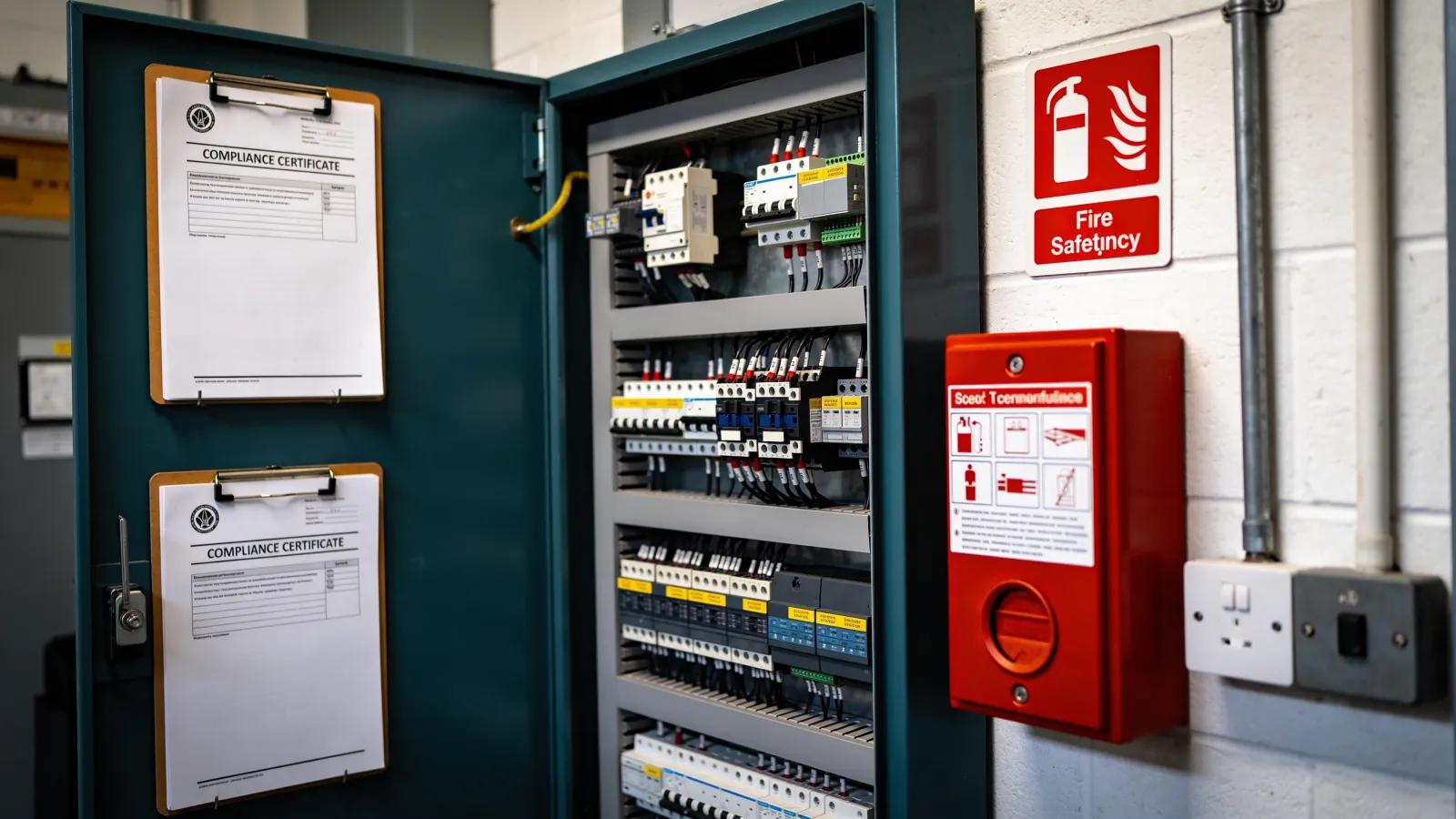
There is also a safety and compliance angle that matters in Scotland specifically. Under the Repairing Standard, which has applied to private rented properties since improvements landed in 2024, landlords must keep installations and the structure in proper working order. If your fixed wiring inspection sits with one firm, your fire detection with another, and your gas safety with a third, you are the only person holding the full compliance picture. When records are scattered, gaps hide easily, and a missed certificate is a problem you discover at the worst possible moment.
The same applies to commercial sites under workplace health and safety duties. Fragmented record keeping makes an audit slower and a real incident harder to defend.
What consolidating actually changes
Bringing services under one accountable partner does not magically make the work cheaper per task. What it changes is everything around the task. One point of contact means one number to call, one person who knows your buildings, and one organisation that cannot pass the blame sideways because it owns the whole scope.
The practical gains are specific:
- One scheduled visit can cover cleaning, a minor repair, and a grounds check, rather than three separate mobilisations and three lots of travel time.
- Planned and reactive work sit in one system, so a recurring fault gets spotted as a pattern instead of being treated as five unrelated call-outs.
- Compliance certificates, asset records, and job history live in one place, ready for an audit or a sale without a frantic email hunt.
- Invoicing collapses from many documents into a predictable monthly position you can actually forecast against.
This is the model ORVO Group is built around: facilities management, property maintenance, and commercial cleaning delivered by one partner across Scotland, with a single point of contact who carries responsibility from the first report to sign-off.
How to decide if you have a sprawl problem
You do not need a consultant to work this out. Spend twenty minutes with last year's records and ask four questions.
- How many separate suppliers touched your property, and how many invoices did that generate each month?
- How many hours a week does someone on your team spend coordinating contractors rather than managing the property?
- In the last year, how many issues fell into a gap between two suppliers and grew before anyone fixed them?
- If a regulator asked for your full compliance file tomorrow, could you produce it in an hour, or would you be chasing five firms?
If the answers make you wince, the fix is not necessarily firing everyone overnight. It is mapping what you actually need across a year, then consolidating where the coordination cost clearly outweighs any benefit of keeping a specialist separate. Some specialist trades genuinely warrant their own contract. Most routine, recurring work does not.
A simpler way to run a property
Supplier sprawl is rarely a single bad decision. It is the slow accumulation of reasonable ones, and the cost shows up in your time long before it shows up in your accounts. The question worth asking is not whether each contractor is good at their job. It is whether you should be the one holding five of them together.
If you would like a clear view of what one accountable partner could cover, take a look at our facilities management service, or get in touch and we will help you map it against what you are running today.