Most property managers judge their cleaning contract by the price on the invoice. That figure is the easy part. The harder cost to see is the one that builds up over months when standards slip, when the same areas get missed, and when a different person turns up every week with no record of what was done before. Inconsistency rarely announces itself. It shows up later as a stained carpet that needs replacing, a complaint from a tenant, or a deep clean that should never have been necessary.
For commercial property owners and facilities managers across Scotland, this hidden cost is real money. Below is a breakdown of where it leaks, and how to plug it.
Where the money actually goes
A cheap cleaning contract that delivers patchy work is rarely cheap once you add up the knock-on effects. The costs tend to fall into a few predictable areas.
- Premature replacement of fittings. Vinyl flooring, carpet tiles and upholstered furniture have a working life that depends heavily on regular care. Grit walked in from a Glasgow winter acts like sandpaper underfoot. Skip the entrance matting routine and the daily vacuum, and a carpet rated for ten years can need replacing in five or six. Replacing 200 square metres of contract carpet runs into thousands.
- Reactive deep cleans. When routine work falls behind, dirt builds to the point where a standard clean no longer touches it. You then pay a premium for restorative work: scrubbing, machine extraction, descaling. This is almost always more expensive than the consistent maintenance that would have prevented it.
- Staff time spent managing the problem. Every chased email, every reported miss, every re-inspection is your own time or your facilities team's time. It is easy to lose two or three hours a week to a contract that needs babysitting.
- Health and safety exposure. Washroom hygiene, kitchen surfaces and spillage response are not cosmetic. A lapse here can mean a sickness complaint, a failed audit, or worse.
None of these appear on the cleaning invoice. They appear in your maintenance budget, your void costs, and your own diary.
Why inconsistency creeps in
Inconsistent results usually trace back to a handful of root causes rather than laziness. High staff turnover is the most common. When the cleaner who knew your building leaves and nobody hands over the detail, the new person starts from zero and the easy-to-miss tasks get missed.
A vague specification is the second cause. If the contract says "clean the office daily" without defining frequency for windows, skirting, vents, behind furniture and high-touch points, then those tasks live in a grey zone and slowly disappear. The third cause is no record of what was done. Without a simple sign-off or checklist, nobody can tell whether the kitchen was cleaned on Tuesday or whether it was skipped, so problems only surface once they are visible to everyone.
Notice that all three causes are about systems, not effort. A motivated cleaner with no specification and no continuity will still produce uneven work.
What consistent cleaning is worth
It helps to flip the question. Rather than asking what good cleaning costs, ask what it protects. A well-maintained commercial space holds its value in ways that are easy to measure once you look.
Tenants renew leases in buildings that feel cared for. A tired, grubby common stair or reception tells a prospective tenant exactly how the building is run, and a single void period on a commercial unit can wipe out a year of cleaning savings. Presentation also shortens the time a vacant unit sits empty. For factored residential blocks, consistent close cleaning is one of the few things every owner notices and the first thing they complain about when it slips.
There is a productivity angle too. Research into workplace environments has consistently linked clean, well-aired offices to fewer sick days and better focus. You do not need to put a precise figure on it to accept that a hygienic workplace earns its keep.
How to fix it without overpaying
You do not solve inconsistency by spending more. You solve it by tightening the system around the work.
- Write a specification with frequencies. List every task and how often it happens: daily, weekly, monthly, quarterly. Ambiguity is where standards die.
- Insist on continuity. Ask any provider how they cover holidays and turnover, and whether the same team services your site week to week.
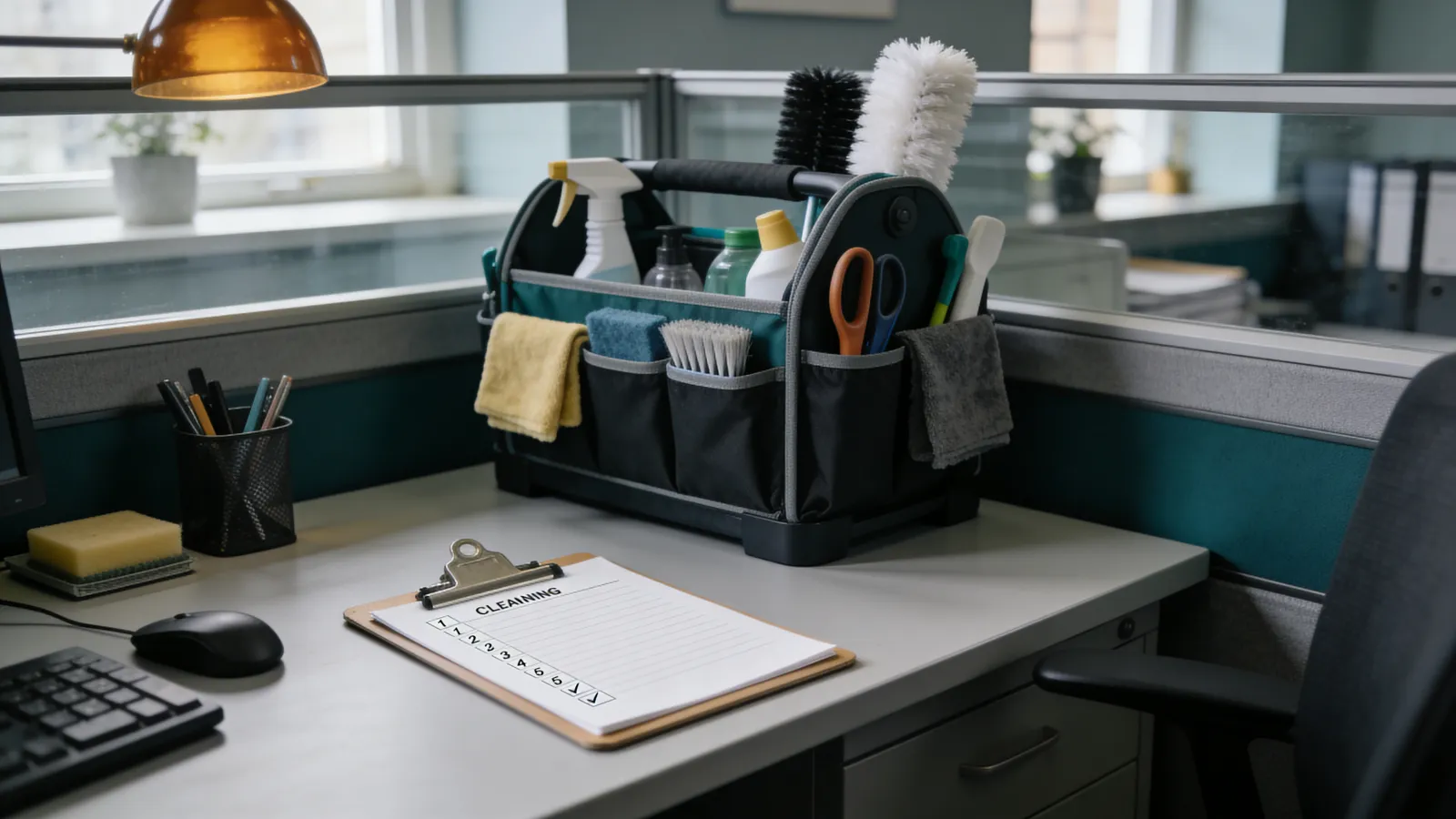
- Require evidence. A dated checklist, a photo log or a digital sign-off turns "I think it was done" into a record you can check in seconds.
- Schedule periodic deep work. Build window cleaning, carpet extraction and washroom descaling into the calendar before they become emergencies.
- Review quarterly. A short walk-round with your provider every three months catches drift early, while it is still cheap to correct.
This is the approach ORVO Group takes with the commercial sites and factored blocks we look after across Scotland: a clear scope, a consistent team, and a record you can rely on, all under one point of contact rather than chased across three suppliers.
Bringing it together
The cheapest cleaning contract on paper is often the most expensive in practice, once you count the replaced flooring, the rescue cleans and the hours you spend managing it. Consistency is what removes those hidden costs, and it comes from clear specifications, continuity of people, and a simple record of what was done.
If you are not sure whether your current arrangement is quietly costing you, it is worth a fresh pair of eyes. Take a look at our commercial cleaning service, or get in touch for a straightforward review of your site.