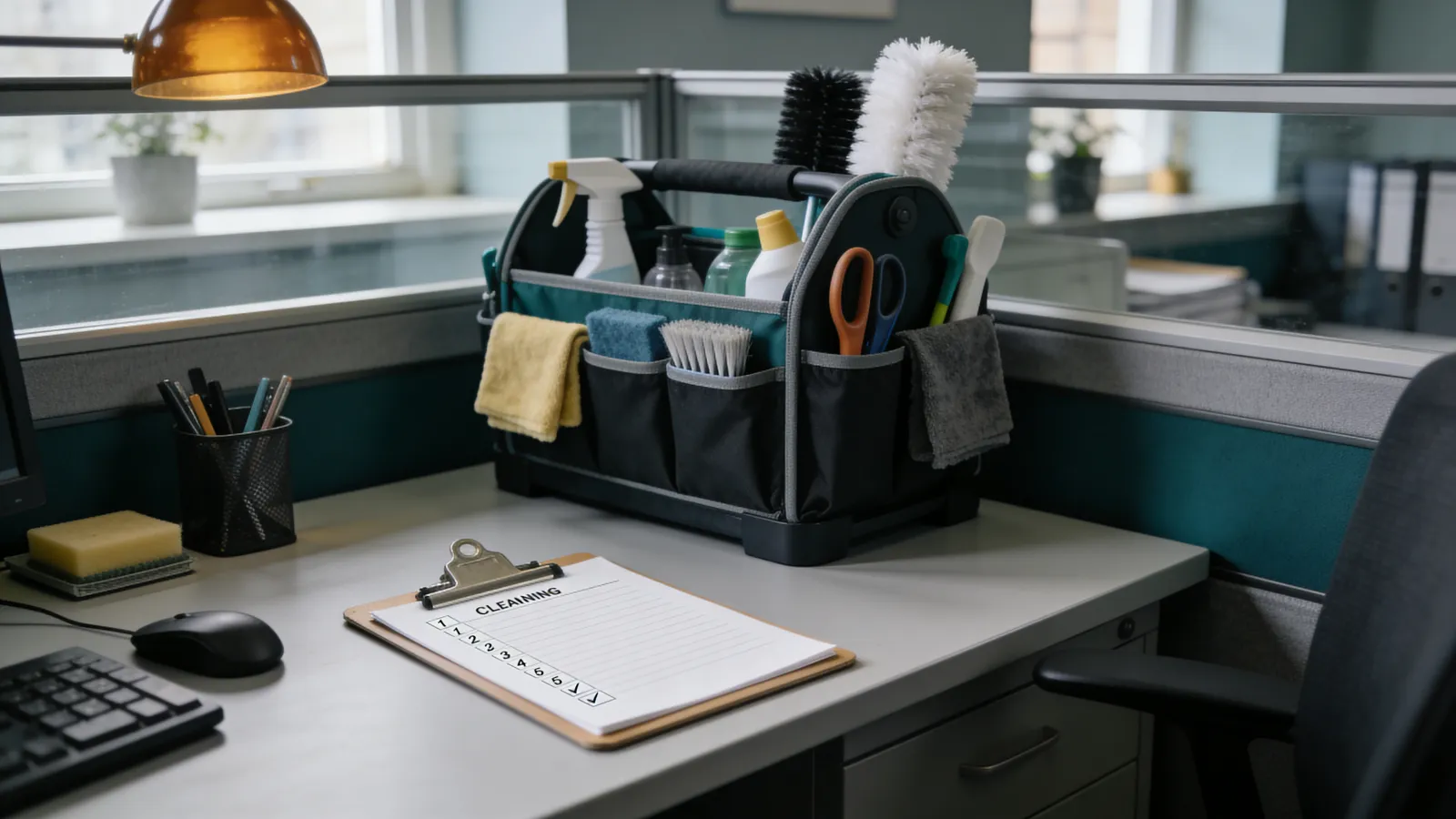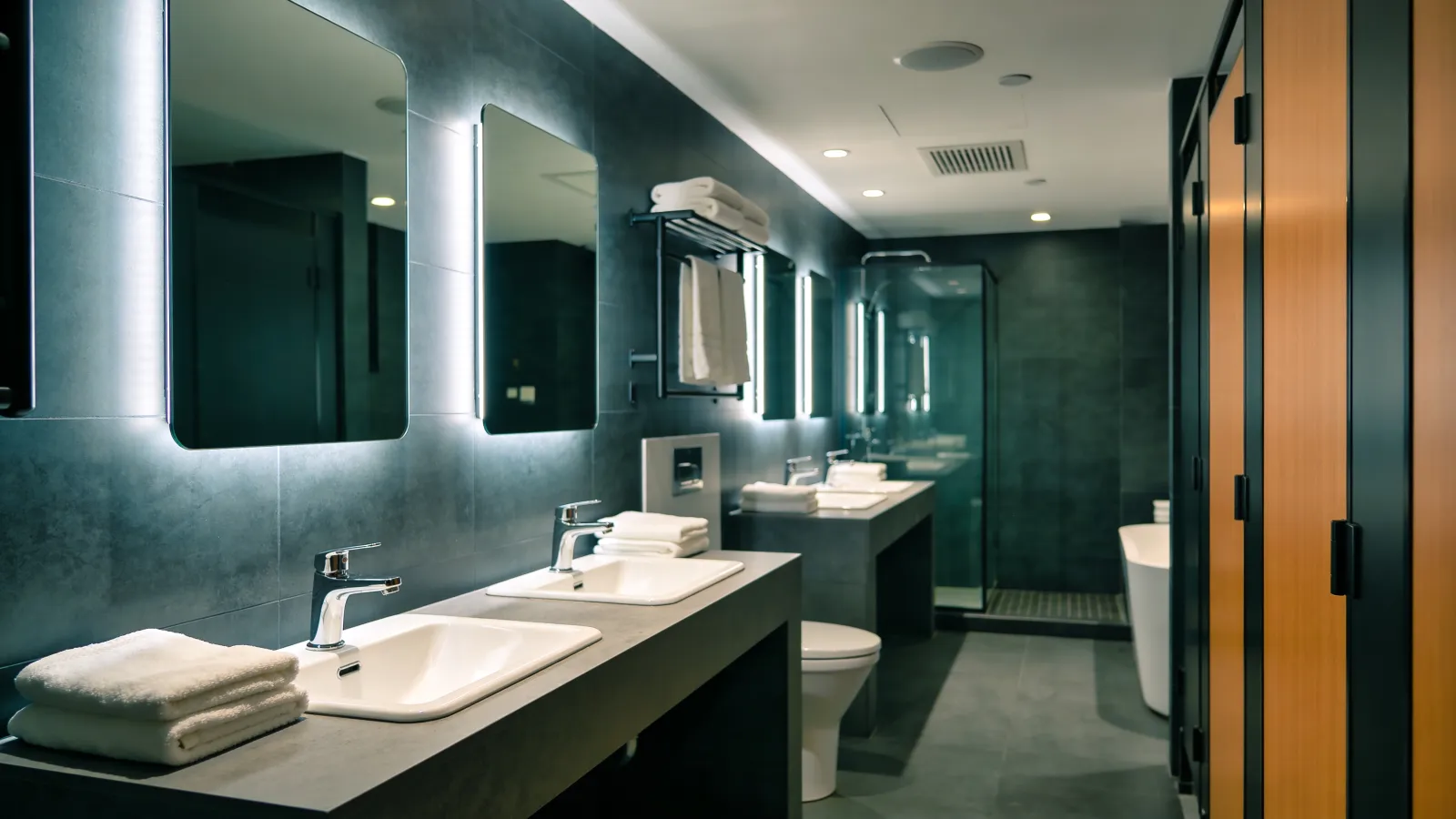
Daily cleaning keeps a building presentable. A deep clean keeps it healthy. The two are not the same job, and confusing them is the most common reason premises start to look tired despite a contractor turning up every morning. Routine cleaning handles surfaces, bins, washrooms and floors on a rolling basis. Deep cleaning reaches the parts a daily round never touches: behind kitchen equipment, inside extract systems, under desks and machinery, grout lines, high-level ledges, carpets that have absorbed a year of foot traffic, and ventilation grilles thick with dust.
So how often does a Scottish commercial property actually need one? The honest answer is that it depends on the building, but the ranges are well established and worth knowing.
Start with your sector and footfall
The right frequency is driven by what happens inside the building and how many people pass through it. A quiet two-person office on an industrial estate has different needs to a city-centre gym.
- Offices and professional workplaces: a full deep clean every six to twelve months, with carpets and upholstery typically done annually. Add a second clean if you run hot-desking or a busy open-plan floor.
- Hospitality, cafes and restaurants: quarterly at minimum for front of house, and kitchens need a deep clean and extract canopy degrease every three to six months to stay compliant and reduce fire risk.
- Healthcare, dental and care settings: monthly to quarterly, depending on clinical area, with strict attention to high-touch points and sanitisation.
- Gyms and leisure: quarterly for the main floor, more often for changing rooms, where moisture and high turnover create real hygiene problems.
- Retail and customer-facing units: twice yearly for most, quarterly for high-footfall stores or anywhere food is handled.
- Schools, nurseries and education: a thorough deep clean during each main holiday, so roughly three times a year, plus the summer reset.
- Industrial units and warehouses: annually for general areas, with welfare facilities and any food-handling zones treated like hospitality.
These are starting points, not rules. Two offices on the same street can sit a full tier apart if one has a dog-friendly policy and the other does not.
The Scottish factors that push frequency up
Conditions here matter. Our climate and building stock change the calculation more than people expect.
Wet, mild winters mean grit, salt and moisture get walked in for months on end. Entrance matting and the first few metres of any floor take a heavy beating from October through March, and carpets near doors often need attention twice a year rather than once. Older tenement-conversion offices and listed buildings, common across Edinburgh, Glasgow and Aberdeen, frequently have poor ventilation and original features that trap dust and need careful, periodic specialist cleaning.
Heating runs hard for a long season too, and warm, occupied rooms with limited airflow are exactly where dust, allergens and condensation build up. If your premises feel stuffy by late winter, that is usually a sign the deep clean is overdue rather than a quirk of the building.
Read the building, not just the calendar
A schedule is useful, but the premises will tell you when it needs more. Walk the space and look for the honest signals:
- Grout, sealant and washroom corners that look grey or stained no matter how often they are wiped.
- A noticeable smell when you arrive first thing, before windows are opened.
- Visible dust on high ledges, light fittings, vents and the tops of partitions.
- Carpets that feel flat, look darker in walkways, or never quite seem clean.
- More staff colds, coughs or hay-fever complaints than the season alone explains.
- Kitchen or breakout areas where grease has started to feel tacky underfoot or on surfaces.
Any two of these together usually mean you have stretched the interval too far. It is cheaper to bring the schedule forward than to replace flooring or fail an inspection.
Build it into a plan, not a panic
The buildings that stay in good shape treat deep cleaning as planned, preventative maintenance, the same way you would service a boiler. Fix the routine frequency for your sector, book the dates in advance, and layer in extras around known pressure points: post-winter in spring, before a busy trading period, ahead of an audit or open day, and immediately after any refurbishment, which always leaves fine dust everywhere.
Keeping records helps too. A simple log of what was deep cleaned and when supports health and safety obligations, reassures tenants and insurers, and makes it obvious if one area is quietly being missed. This is one of the advantages of having routine and deep cleaning under a single accountable partner: at ORVO Group we can see the whole picture across a property rather than reacting to one-off requests, which is how small problems get caught before they become expensive ones.
Getting the frequency right for your building
There is no single correct interval, only the right one for your sector, footfall and building. If you are not sure where your premises sit, a quick site assessment will give you a realistic schedule and a clear cost, with no guesswork.
If you would like that done properly, take a look at our commercial cleaning service or get in touch for a tailored plan across your Scottish properties.