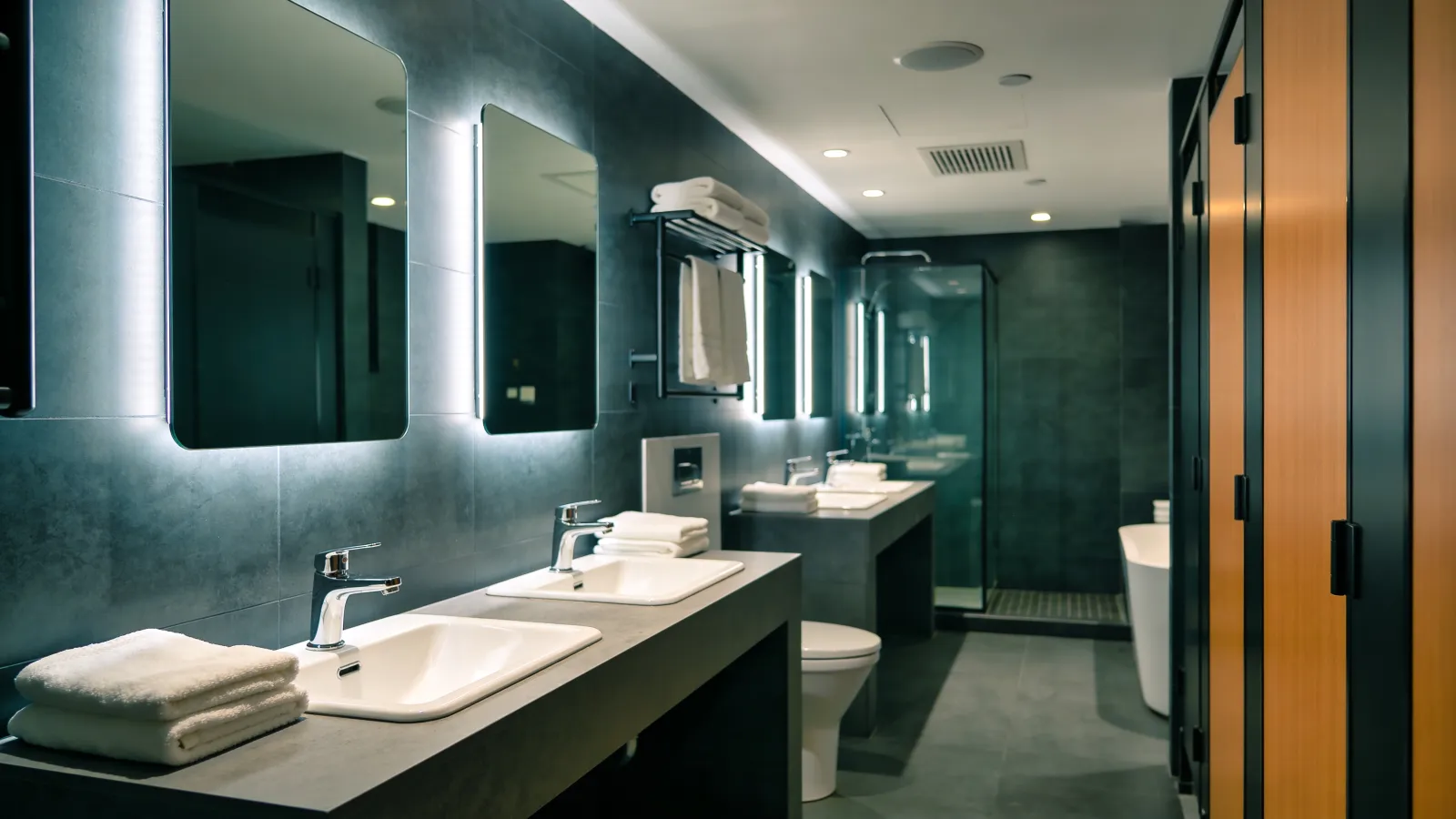
People form a quick opinion of your building in the washroom. A tenant viewing office space, a customer in a city centre cafe, a parent at a leisure centre: they all notice the same thing. If the washroom is clean, stocked and dry, they assume the rest of the operation is run with care. If it is not, no amount of polished reception desk undoes that impression. For property owners and facilities managers across Scotland, washroom standards are a reputation issue first and a hygiene issue second, and the two are tightly linked.
Why the washroom carries so much weight
Washrooms are high traffic and high consequence. A single 200 person office can generate hundreds of toilet uses a day, and every one of them is a chance for something to go wrong: an empty soap dispenser, an overflowing bin, a streaked mirror, a lingering smell. Visitors rarely complain out loud. They simply lower their estimate of your building and tell colleagues quietly.
There is a compliance dimension too. Under the Workplace (Health, Safety and Welfare) Regulations 1992, employers must provide suitable and sufficient sanitary conventiences and washing facilities, kept clean and in working order. For food businesses, Food Standards Scotland inspections will flag washroom hygiene as part of the wider score. Getting this area right is not optional polish. It is a baseline you are expected to meet.
What a real standard looks like
"Keep it clean" is not a standard. A standard is specific, measurable and assigned to someone. The components that matter most:
- Frequency: how many scheduled cleans per day, tied to footfall rather than a flat rule. A busy retail washroom may need three or four checks a day, a quiet first floor office one.
- Consumables: soap, paper towels or working dryers, toilet roll and seat sanitiser never allowed to run empty, with a par level that triggers a refill before the last unit is gone.
- Surfaces: toilets, urinals, taps, handles, dispensers and light switches disinfected, not just wiped, because touch points spread the most.
- Floors and odour: floors mopped and dried so they are not a slip risk, drains kept clear, and odour controlled at source rather than masked with overpowering fragrance.
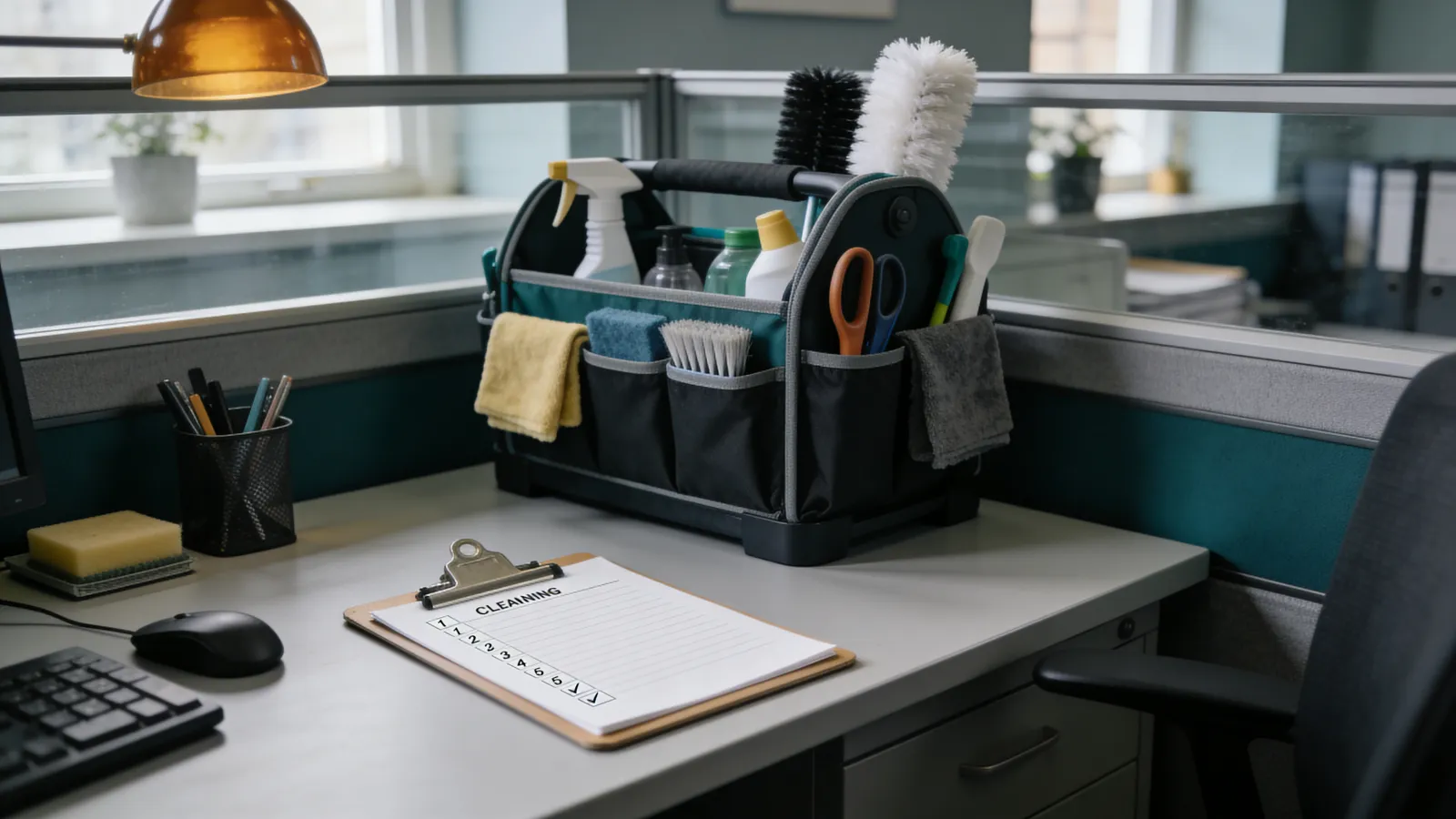
- Evidence: a visible check sheet or digital log showing who cleaned, when, and what they topped up.
That last point is what separates a managed washroom from a hopeful one. When a complaint or an inspection lands, you want a record that proves the routine was running, not a shrug.
Building a schedule that holds up
Start by mapping your busiest two hours. In most buildings that is mid morning and just after lunch, and that is when standards slip if the rota does not account for it. Schedule a mid morning and mid afternoon interim check on top of the deep clean, even if those checks take only ten minutes. The interim check restocks consumables, clears bins, wipes the worst touch points and confirms nothing is broken.
Then separate daily work from periodic work. Daily covers the visible basics. On a weekly or fortnightly cycle, add descaling of taps and toilets, deep cleaning of grouting and tiles, and a check of extraction and ventilation, because poor airflow is the real cause of most persistent smells. Quarterly, look at the things that quietly age a washroom: sealant around basins, sticking cubicle locks, dripping cisterns and discoloured ceiling tiles. A washroom can be spotless and still feel neglected if the fittings are tired.
Cold weather adds a Scottish wrinkle. Through a Glasgow or Aberdeen winter, salt and grit get walked in and pooling water near entrances becomes a slip hazard that reaches the washroom floor. Heated hand dryers and damp conditions also encourage condensation, so ventilation checks matter more from November to March.
Getting accountability right
The most common failure is not effort, it is ownership. Cleaning gets split across a caretaker, an external visit and "whoever notices", and the gaps fall between them. Nobody is clearly responsible for the 4pm restock, so it does not happen, and by 5pm the dispenser is empty during the busiest exit of the day.
This is where a single accountable partner earns its place. At ORVO Group we set the standard in writing, run the schedule, and report against it, so there is one point of contact rather than a chain of "not my job". When a property factor manages multiple sites, that consistency matters even more: the same standard in Edinburgh, Dundee and Inverness, audited the same way, with one monthly summary instead of three separate conversations.
A short, practical audit you can run yourself once a week:
- Walk in as a visitor would and use your nose first. Smell is the earliest warning.
- Check every dispenser, including the least used cubicle.
- Look up and down: ceiling vents, then floor corners and behind the toilet.
- Test one tap and one flush. Small faults become big complaints.
A reputation worth protecting
A clean, stocked, well maintained washroom rarely gets praised, and that is the point. It removes a reason to think less of your building and quietly reinforces that the place is well run. The cost of getting it right is modest. The cost of getting it wrong shows up as lost tenants, lower inspection scores and reviews you cannot easily undo.
If you want a clear washroom standard with the schedule, checks and reporting to back it up, take a look at our commercial cleaning service or get in touch and we will help you set one for your property.