Most office cleaning complaints come down to one thing: nobody wrote down what "clean" actually means. The contract says "daily office cleaning" and everyone assumes their version of that. Then the kitchen bins overflow on a Friday, the meeting room glass stays smeared for a fortnight, and the facilities manager spends Monday morning firing off emails. A proper specification fixes this before it starts. It tells the cleaner exactly what to do, how often, and to what standard, so you can hold the work to an agreed line rather than a hunch.
This is not paperwork for its own sake. A good spec is the single document that protects you, your provider and your staff. Here is how to build one that holds up.
Start with frequencies, not tasks
The most common mistake is listing tasks without saying how often each one happens. "Clean the kitchen" is meaningless. "Wipe worktops, empty bins and damp mop the floor daily; descale the kettle and clean inside the microwave weekly; deep clean appliance exteriors monthly" is a spec.
Split every area into three frequency bands and assign each task to one:
- Daily: bins, kitchen surfaces, toilets, high traffic floors, reception, door handles and shared touch points.
- Weekly: internal glass, skirtings, low level dusting, appliance interiors, and a fuller floor clean in lower traffic zones.
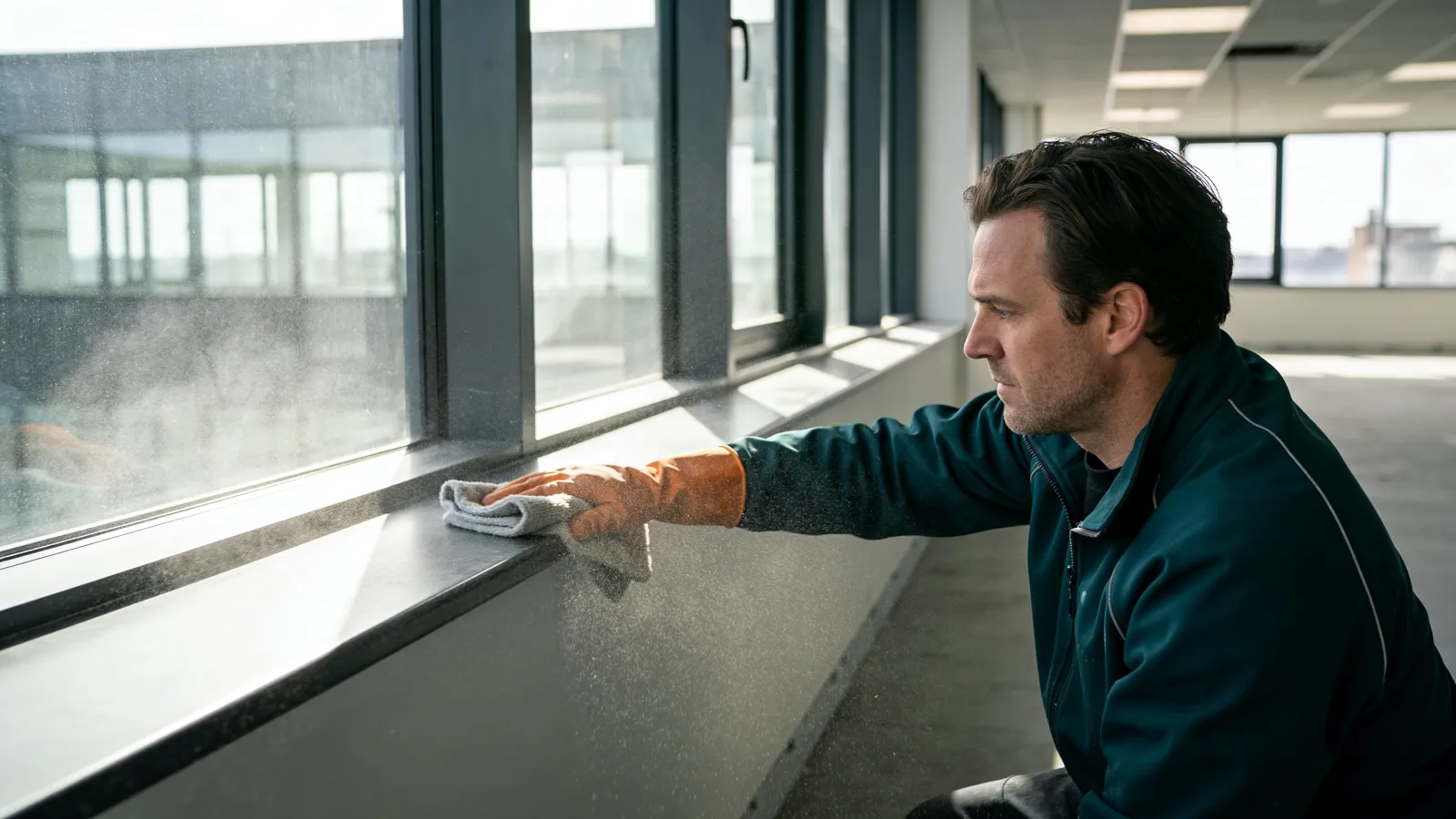
- Periodic: high level dusting, vents, upholstery, carpet extraction, hard floor maintenance, and window reveals. Set these monthly, quarterly or twice yearly and put the dates in writing.
Touch points deserve a special mention. Since the pandemic, most Scottish offices keep handles, light switches, lift buttons and shared keyboards on a daily wipe with a suitable disinfectant. Name them explicitly, because "surfaces" rarely gets read that way.
Go room by room, not building wide
A blanket list applied to the whole floor leaves gaps. Walk the building and write the spec by area: reception, open plan desks, meeting rooms, kitchen and breakout, toilets, circulation routes, stairwells and the often forgotten ones such as the post room, server room and any external smoking shelter.
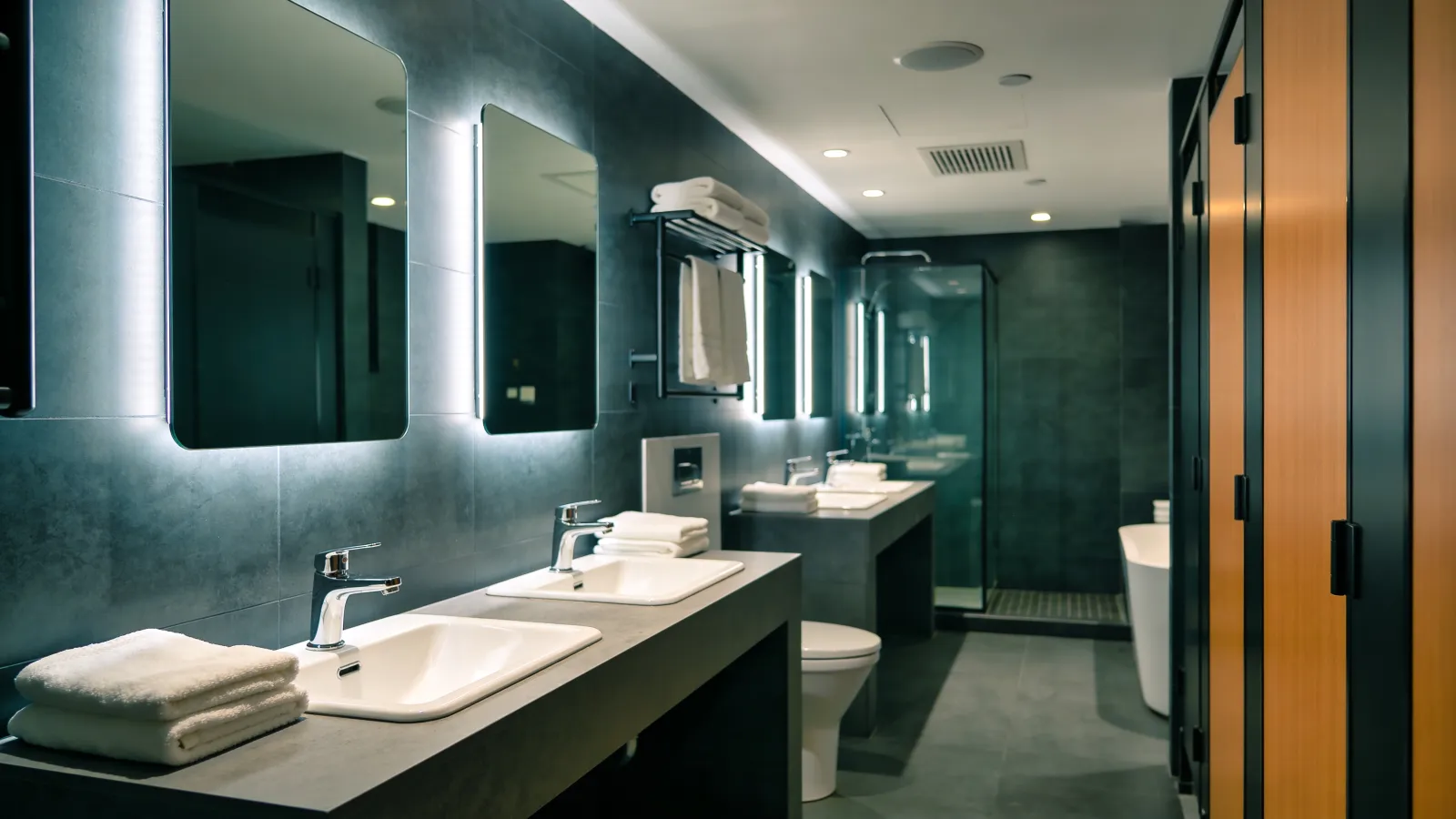
For each area, state the tasks, the frequency, and any access notes. Meeting rooms need glass and table tops checked daily but only matter when they are used, so a quick visual pass plus a reset is often more useful than a rigid scrub. Toilets, by contrast, are non negotiable: a daily clean of pans, seats, sinks, mirrors, floors and consumable restocking, every working day, with no exceptions.
Be specific about consumables too. Decide who supplies toilet roll, hand towels, soap and bin liners, and who checks stock levels. Running out of hand soap is a small thing that makes a building feel neglected fast.
Define the standard and how you measure it
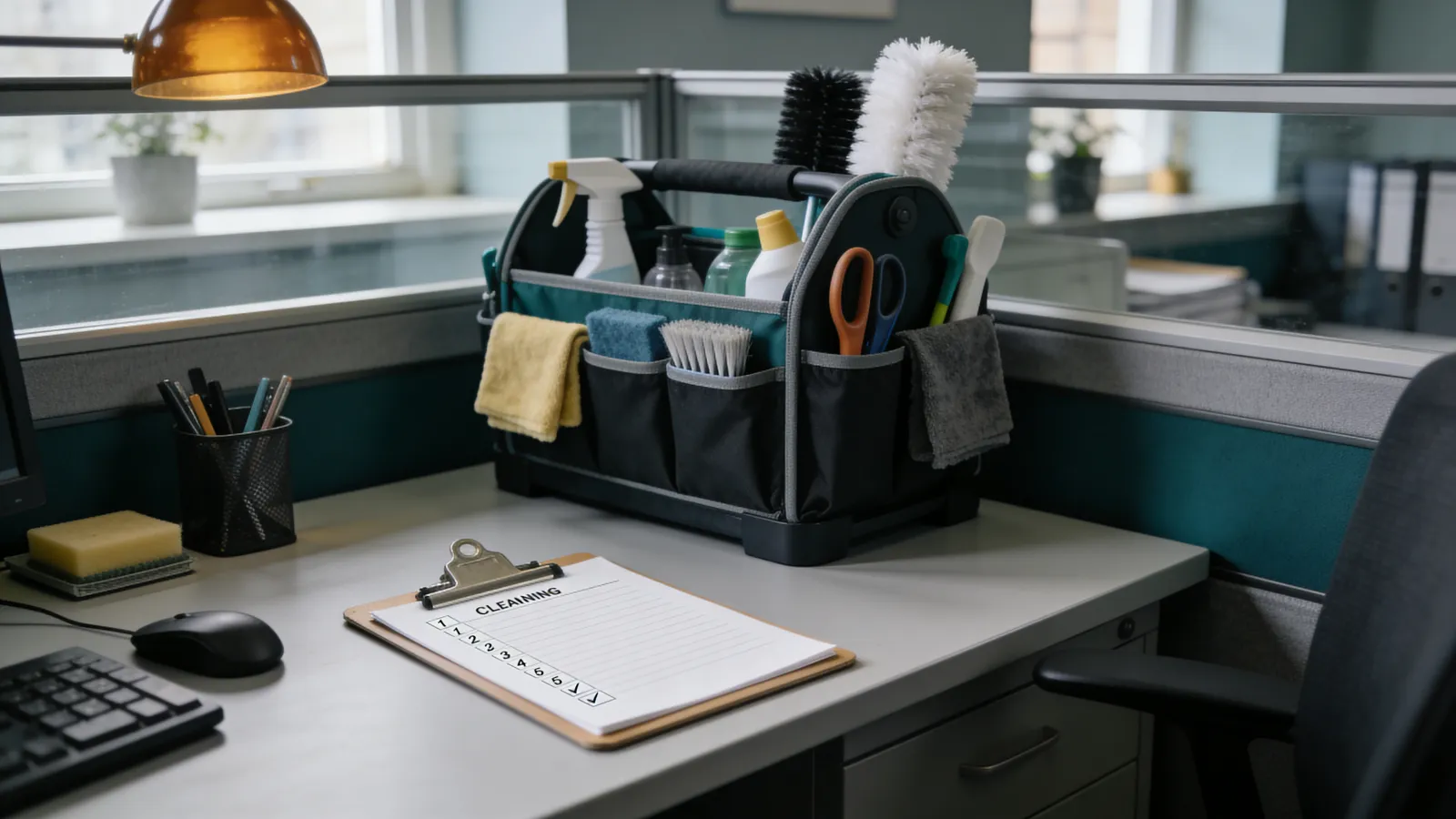
A spec without a standard is just a wish list. Agree what a finished area looks like and how you will check it. The simplest method is a short monthly walk round using a scored checklist: each area marked pass or fail against the spec, with a target such as 90 percent or above. Anything failing gets logged and re-checked, not just mentioned in passing.
Decide these points up front and write them in:
- Cleaning windows: is the team in before 8am, after 6pm, or working a daytime shift? This affects access, security and what is realistic.
- Reporting: how do cleaners flag a broken dispenser, a spill or a maintenance fault? A logbook or a simple app beats word of mouth.
- Products and method: which surfaces need which approach, and any requirements around fragrance, allergies or COSHH compliant chemicals.
- Response times: how quickly an out of hours spillage or a blocked toilet gets dealt with.
Build in a quick communication loop. A shared issues log that both sides can see turns "the cleaners never do X" into a dated, resolvable record. That single change settles more disputes than any clause.
Keep it alive
A spec is not a document you sign and bury. Offices change: a team grows, a floor gets sublet, footfall shifts after a hybrid working policy lands. Review the spec at least twice a year and after any significant change to how the space is used. If meeting room bookings have doubled, the cleaning frequency should reflect that, not lag a year behind.
At ORVO Group we build the spec with the client rather than handing one over, because the people who use the building know where it actually gets dirty. We then attach the scored checklist to the contract so the standard is visible to everyone, every month. That is also where having one accountable partner helps: when cleaning, maintenance and the wider facilities sit under a single point of contact, a flagged fault during the morning clean gets actioned rather than passed around.
Getting it right
A daily office cleaning spec that works is specific, honest about frequencies, written room by room, and measured against an agreed standard. Get those four right and the day to day mostly runs itself, with the monthly check doing the rest.
If you would like a hand building or reviewing a spec for your building, take a look at our commercial cleaning service or get in touch and we will talk it through.