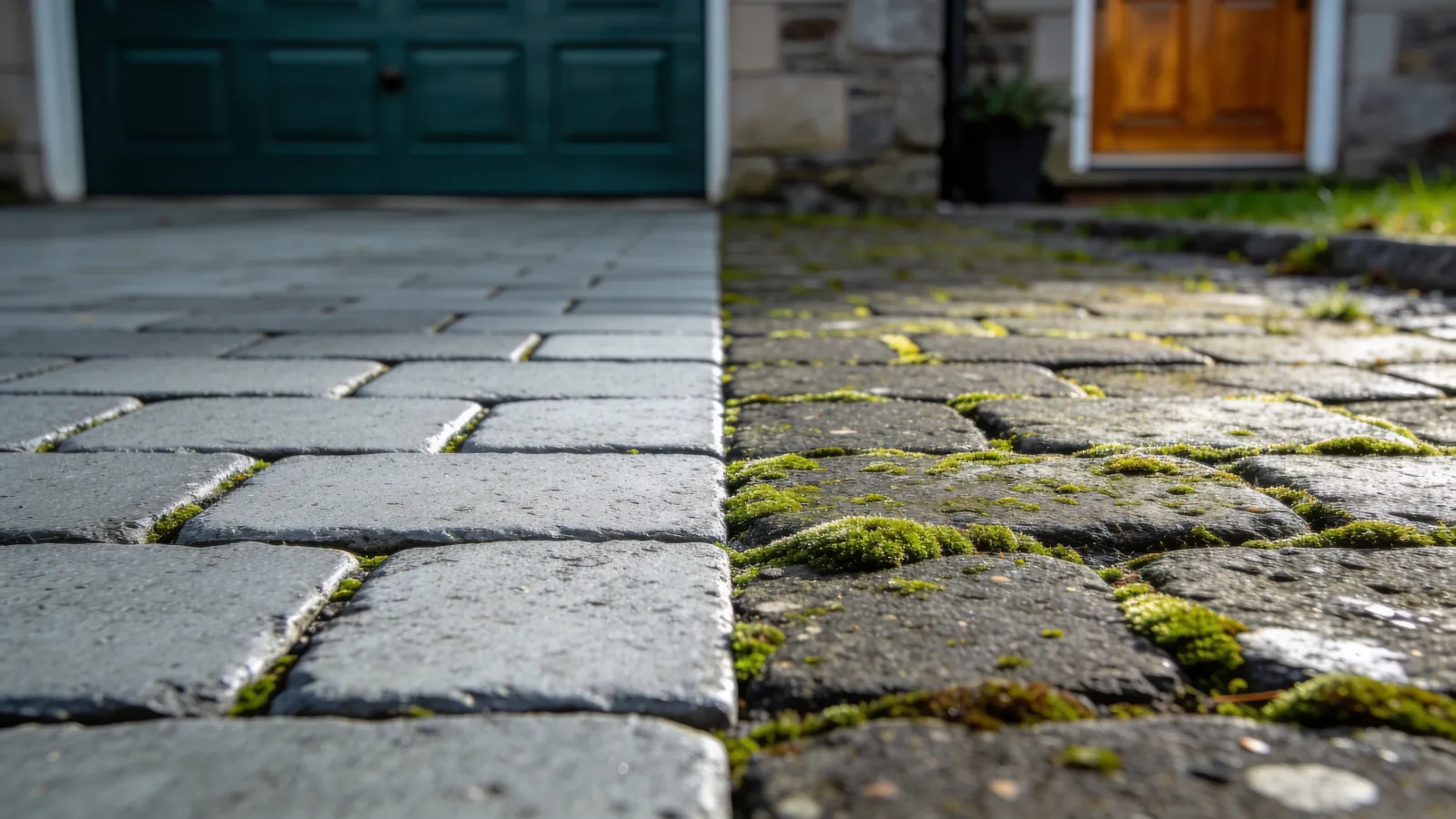
A freshly pressure washed driveway looks transformative for about a fortnight. Then the moss creeps back along the joints, the loose blocks start to rock under foot, and the green film returns to the shaded north side. The cleaning was never the problem. The problem is that cleaning, on its own, only ever addresses the surface, and Scottish hard standing rarely fails at the surface.
If you manage property in Scotland, whether a single commercial frontage in Glasgow or a portfolio of residential blocks across Edinburgh and Aberdeen, it pays to understand why "just give it a wash" is a short term fix. Restoration is the part that makes the work last.
Why pressure washing alone falls short
High pressure water removes algae, lichen, ground in dirt, and surface moss. What it cannot do is change the conditions that put them there. Our climate is damp for most of the year, and shaded, poorly drained surfaces stay wet long enough for biological growth to re establish within weeks.
Worse, aggressive washing can actively cause damage when it is the only tool in use:
- It strips jointing sand from between block paving, which loosens the blocks and accelerates weed growth from below.
- It erodes the surface of older concrete and softer sandstone slabs, leaving them more porous and quicker to stain.
- It blasts loose pointing out of natural stone and flagged areas, opening gaps for water ingress.
- It drives water under slabs laid on sand, which can cause sinking and rocking once the ground settles.
A clean that leaves a surface more vulnerable than it found it is not a saving. It is deferred cost.
What restoration actually involves
Proper restoration treats the wash as step one of several. The sequence matters, and skipping stages is where most jobs go wrong.
First comes assessment. Before any water touches the surface, the substrate type needs identifying, because block paving, poured concrete, resin bound gravel, natural stone, and tarmac all behave differently and tolerate different methods. Drainage and falls get checked, along with the condition of edging, kerbs, and any failed sections.
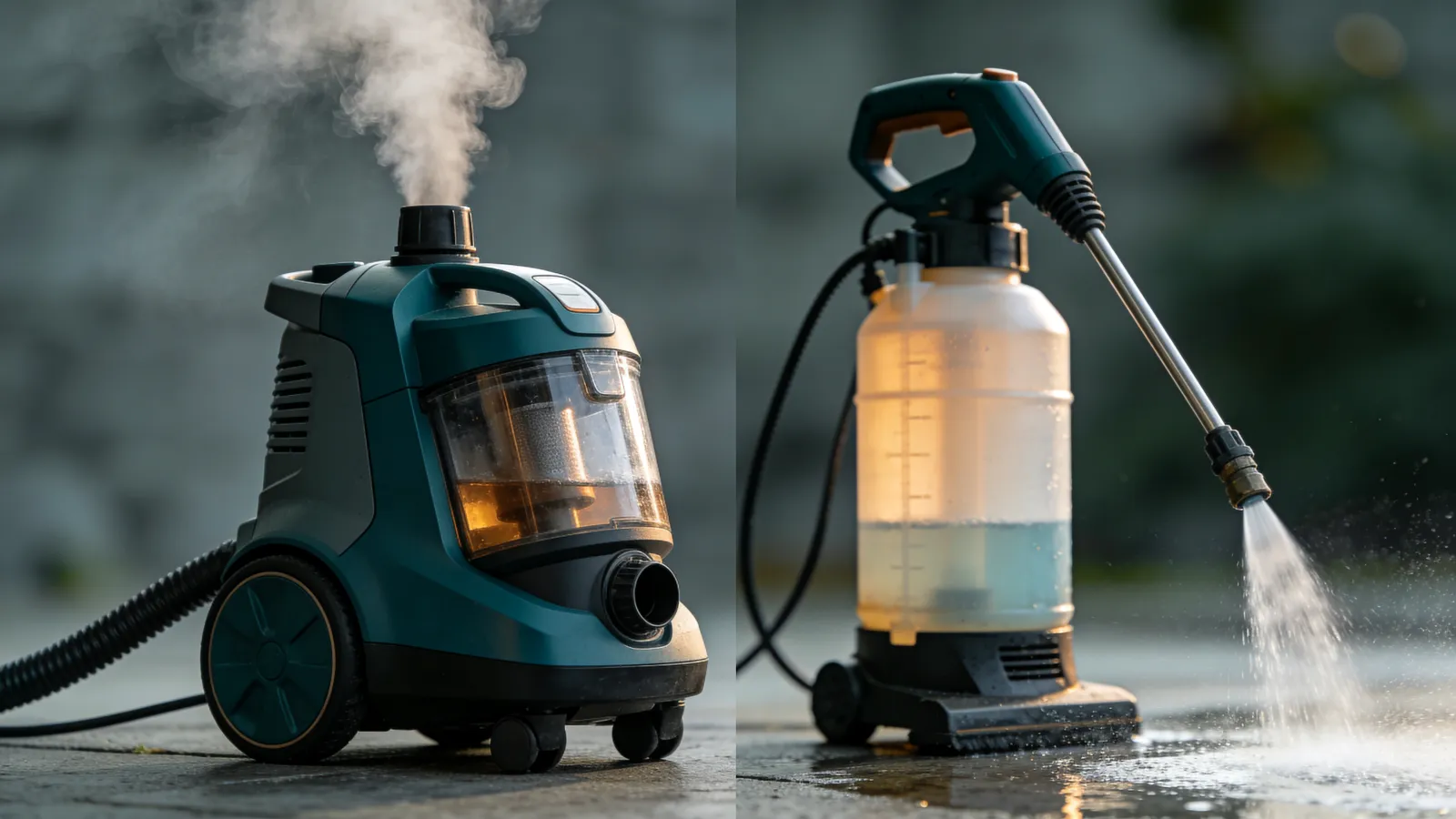
Then the deep clean removes growth and contamination, calibrated to the surface rather than turned up to maximum. After that, the restorative work begins:
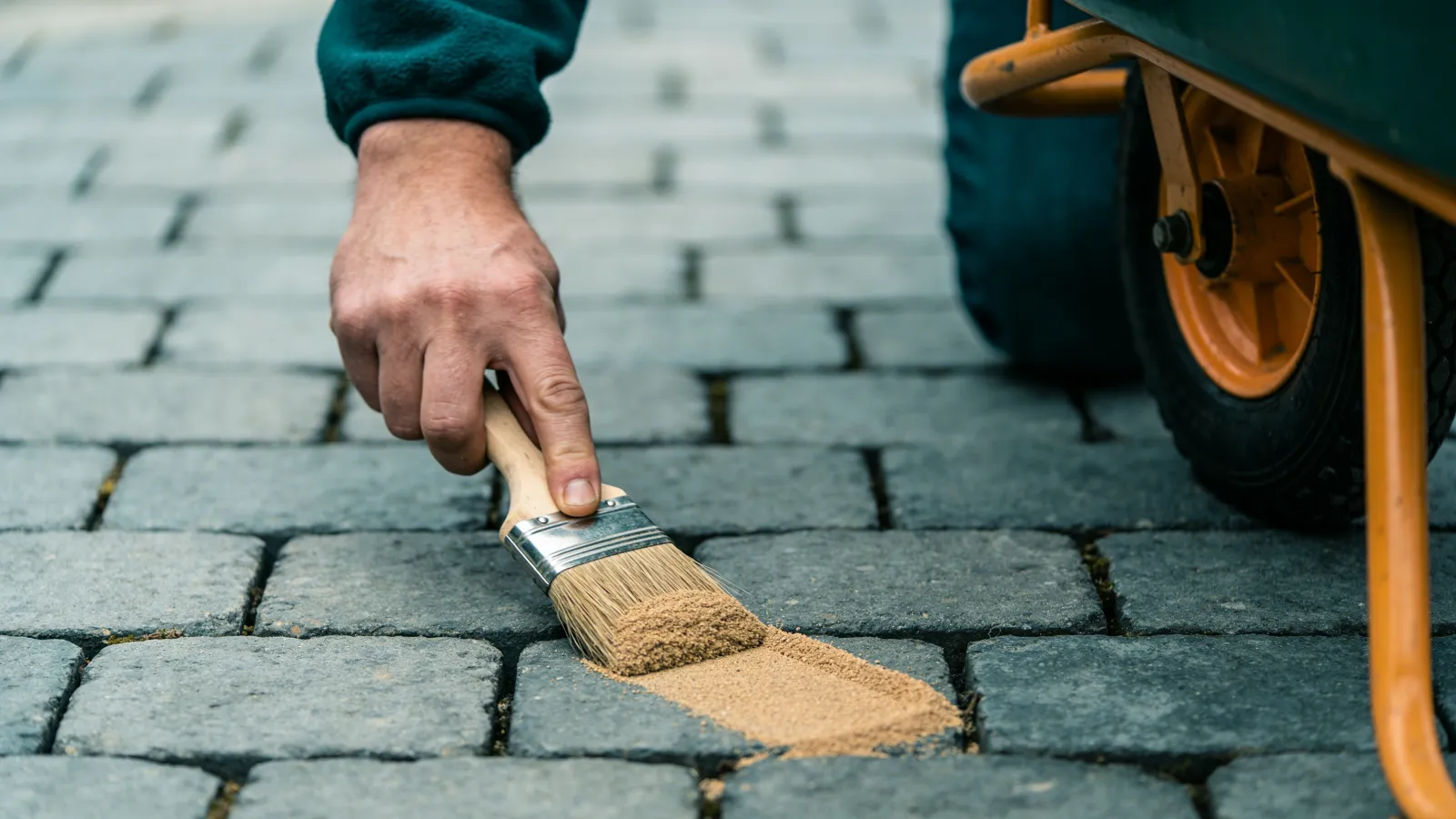
- Re sanding block paving with kiln dried sand brushed into every joint, which locks blocks together and resists weed regrowth.
- Re pointing natural stone and flagged patios where mortar has failed.
- Replacing or relaying individual blocks and slabs that have sunk, cracked, or become a trip hazard.
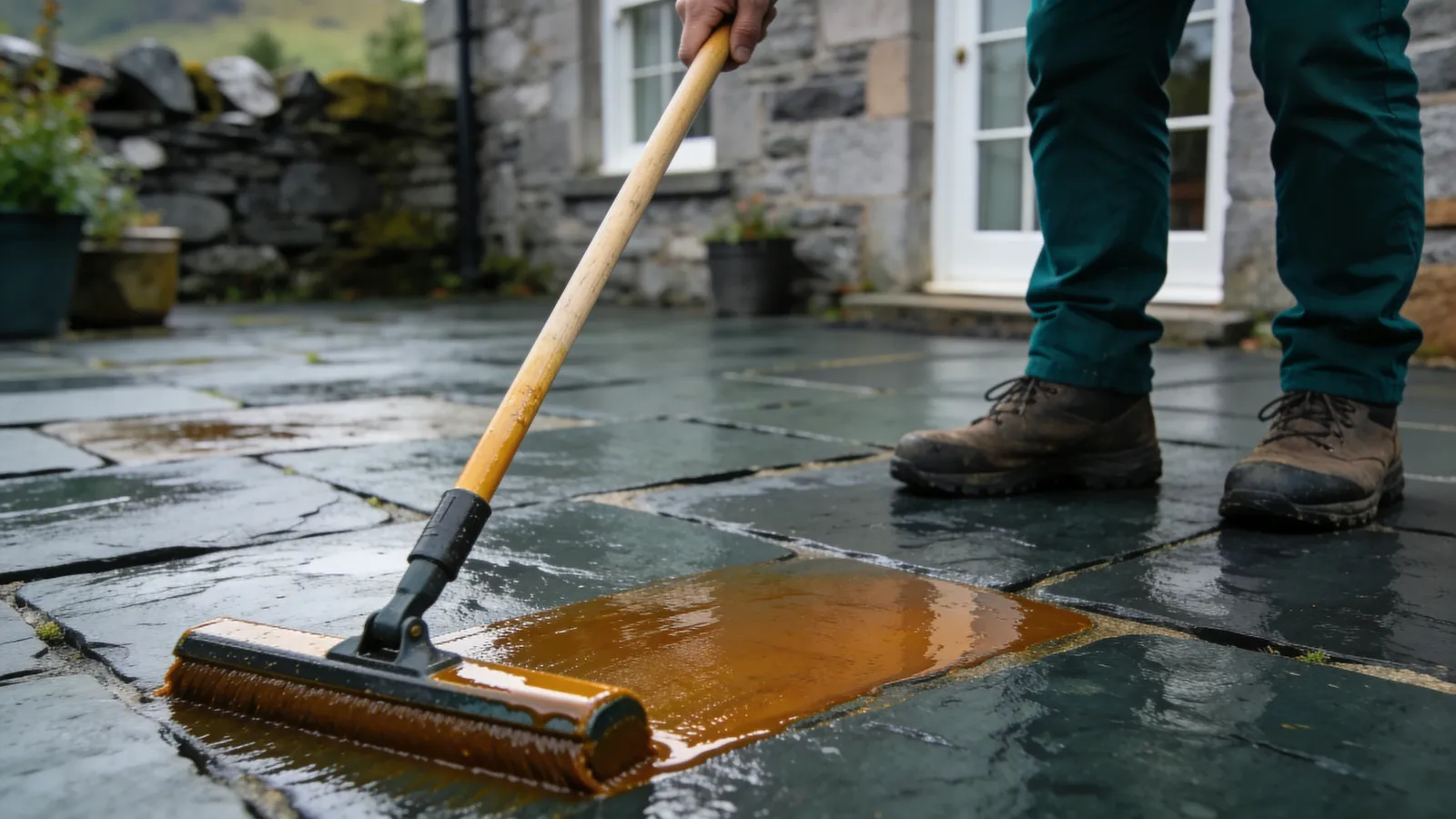
- Applying a biocidal treatment to kill spores at root level rather than just clearing the visible green.
- Sealing, where the surface suits it, to slow staining and make routine maintenance easier.
For a typical domestic driveway of around 40 to 50 square metres, the wash might take half a day, but the re sanding, spot repairs, and treatment can add a second day. On larger commercial car parks and shared courtyards, allow longer and expect the assessment to flag drainage issues that a quick clean would simply have hidden.
The Scottish factors that change the approach
Timing and method both shift north of the border. Biocidal treatments need a dry window to work properly, and they are most effective applied in late spring through early autumn when growth is active and temperatures sit reliably above freezing. Treating in the depths of a wet January wastes product and money.
Frost is the other consideration. Water that sits in open joints and failed pointing expands as it freezes, prising blocks apart and cracking slabs over successive winters. This is exactly why re sanding and re pointing matter so much here: closing those gaps before winter genuinely extends the life of the surface. A driveway restored in September is far better placed to survive its first hard frost than one merely cleaned.
Leaf fall from October onwards also feeds the cycle, as decaying organic matter on a damp surface is precisely what algae and moss thrive on. Clearing it promptly is unglamorous but it protects the work you have paid for.
Maintaining the result
Restoration buys you a surface in good condition. Keeping it that way is straightforward and cheap by comparison:
- Brush off leaves and debris through autumn rather than letting them rot in place.
- Reapply a biocidal treatment annually, ideally in spring, to stay ahead of regrowth.
- Top up jointing sand every couple of years as it naturally washes out.
- Deal with a sinking block or failed joint when it is one block, not when it is twenty.
Handled this way, a properly restored driveway or patio can go five years or more before it needs another full clean, rather than the annual blast that a surface only treatment demands.
This is the thinking ORVO Group brings to hard standing across our facilities and property maintenance work: fix the cause, not just the appearance, so the result holds through the seasons rather than washing away with the next downpour.
Getting it right the first time
If your patios, driveways, or commercial forecourts look tired, the honest question is whether they need cleaning or restoring. Often it is both, and getting the order and method right is what separates a fortnight of improvement from years of it. You can read more about our specialist services service, or get in touch for a straight assessment of what your surfaces actually need.