Running one building is straightforward. You know the boiler, you know the cleaner, you know which door sticks in winter. Running ten buildings spread from Aberdeen to Ayr is a different job entirely. The work itself does not change much, but your ability to see what is happening drops sharply with every site you add. A leak in Dundee gets reported by phone, logged on a spreadsheet, fixed by a contractor you have never met, and signed off by someone who has since left. Multiply that by a dozen properties and the gaps start to cost real money.
Losing visibility is rarely dramatic. It happens quietly, through small assumptions that no longer hold. This post sets out practical ways to keep a clear picture across a portfolio, with Scottish weather, geography, and compliance in mind.
Why visibility slips as you grow
The first site you manage runs on memory and relationships. The tenth runs on systems, or it runs on luck. Most portfolios that struggle are not badly managed. They have simply outgrown the informal habits that worked when there were two or three properties.
Common failure points include:
- Reports arriving by phone, email, text, and WhatsApp, with no single record.
- Different contractors at each site, none of whom talk to each other.
- Reactive repairs that never feed back into planned maintenance.
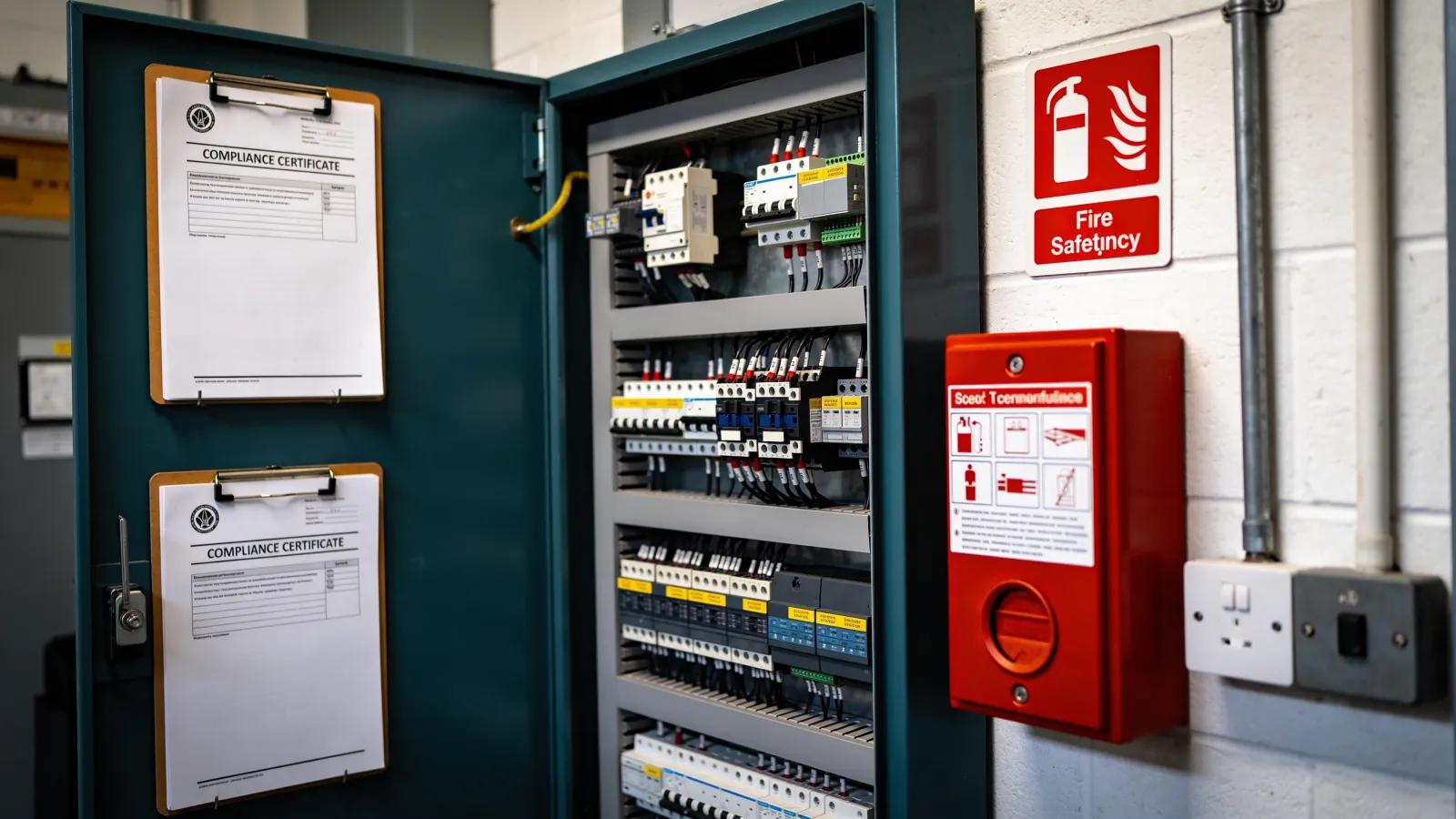
- Compliance certificates (gas safety, legionella, fire risk assessments) tracked across separate folders.
- A single person holding the full picture in their head, which disappears when they go on leave or move on.
Each of these is manageable on its own. Together, across many sites, they create a fog. You find out a fire door was wedged open when an inspector tells you, not before.
Standardise before you scale
Visibility comes from consistency. If every site reports, records, and resolves issues in the same way, you can compare them. If each one does its own thing, you cannot.
Start by agreeing a single reporting channel for every property. One inbox, one portal, or one phone line, not five. Insist that contractors close jobs through that same channel, with a date, a photo, and a short note on what was done. A repair that is not recorded did not happen, as far as your audit trail is concerned.
Set service standards that apply everywhere. For example: emergency response within four hours, urgent repairs within 24 hours, routine work within five working days. When the targets are identical across the portfolio, a site that drifts becomes obvious immediately. You stop firefighting and start managing by exception, which is the only way to handle volume.
This matters more in Scotland than people assume. A portfolio stretching across the central belt and into the Highlands means a contractor cannot reach every site quickly. A burst pipe in Fort William in January is not the same response problem as one in central Glasgow. Standard targets force you to plan for that distance rather than discover it during a crisis.
Plan the predictable, so you can react to the rest
A large share of building work is not a surprise. Gutters fill with leaves every autumn. Heating systems strain through a Scottish winter. Gas appliances need annual checks. Fire alarms need testing on a schedule. None of this should ever arrive as an emergency, yet on busy portfolios it often does, because reactive work crowds out planning.
Build a simple planned maintenance calendar covering all sites in one view. Track:
- Statutory dates: gas safety, electrical inspection (EICR), legionella assessment, fire risk assessment.
- Seasonal work: gutter clearing before winter, heating checks in autumn, gritting arrangements from November.
- Asset lifecycles: roughly when each boiler, roof, and lift will need replacing rather than patching.
When the predictable work is scheduled and visible, the unpredictable work has room to breathe. You also spot patterns. If one site generates three times the reactive callouts of a similar building nearby, that is a signal worth investigating, not just an invoice to pay.
Make one partner accountable for the whole picture
Most visibility problems trace back to fragmentation. Five contractors across eight sites means five different standards, five invoicing styles, and nobody who can answer the simple question: how is the whole portfolio doing this month?
This is where consolidating helps. A single accountable partner covering cleaning, maintenance, and facilities across all your sites gives you one record, one standard, and one point of contact. ORVO Group works this way precisely because property owners and factors managing multiple Scottish sites kept telling us the same thing: they did not want more suppliers, they wanted fewer, with a clearer view.
Practically, ask any partner for a monthly summary that covers all sites together: jobs raised, jobs closed, response times against target, and upcoming compliance dates. If they cannot produce that in one document, your visibility still lives in fragments.
Bringing it together
You do not need expensive software or a bigger team to keep sight of a growing portfolio. You need consistent reporting, standard service targets, a shared planned maintenance calendar, and ideally one partner accountable for the lot. Get those four things in place and the fog lifts. You stop reacting to whatever shouts loudest and start managing the estate as a whole.
If your portfolio has grown past the point where memory and spreadsheets cope, it may be time to consolidate. Take a look at our facilities management service, or get in touch and we will talk through how your sites currently report and where the blind spots are.