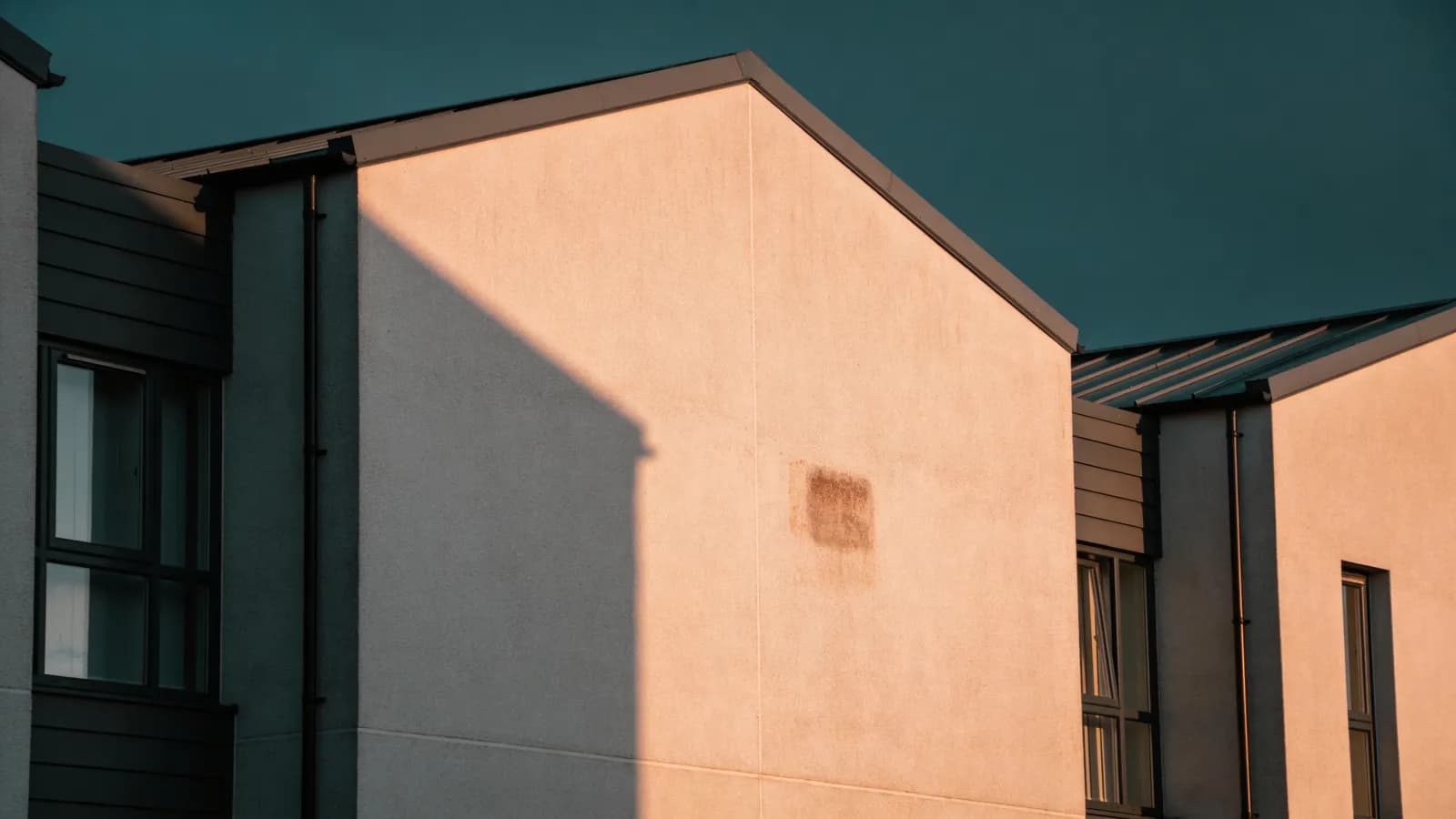
Faded signage and streaked cladding rarely fail all at once. They slip slowly, a season at a time, until a customer mentions it or a brand audit flags the unit. By then the building can look neglected even when nothing structural is wrong. The good news is that most tired exteriors do not need replacing. They need cleaning, and often that is the difference between a premises that reads as cared for and one that quietly puts people off.
This guide covers what actually happens to signage and cladding in the Scottish climate, what cleaning can and cannot fix, and how to plan the work so it lasts.
Why exteriors fade faster in Scotland
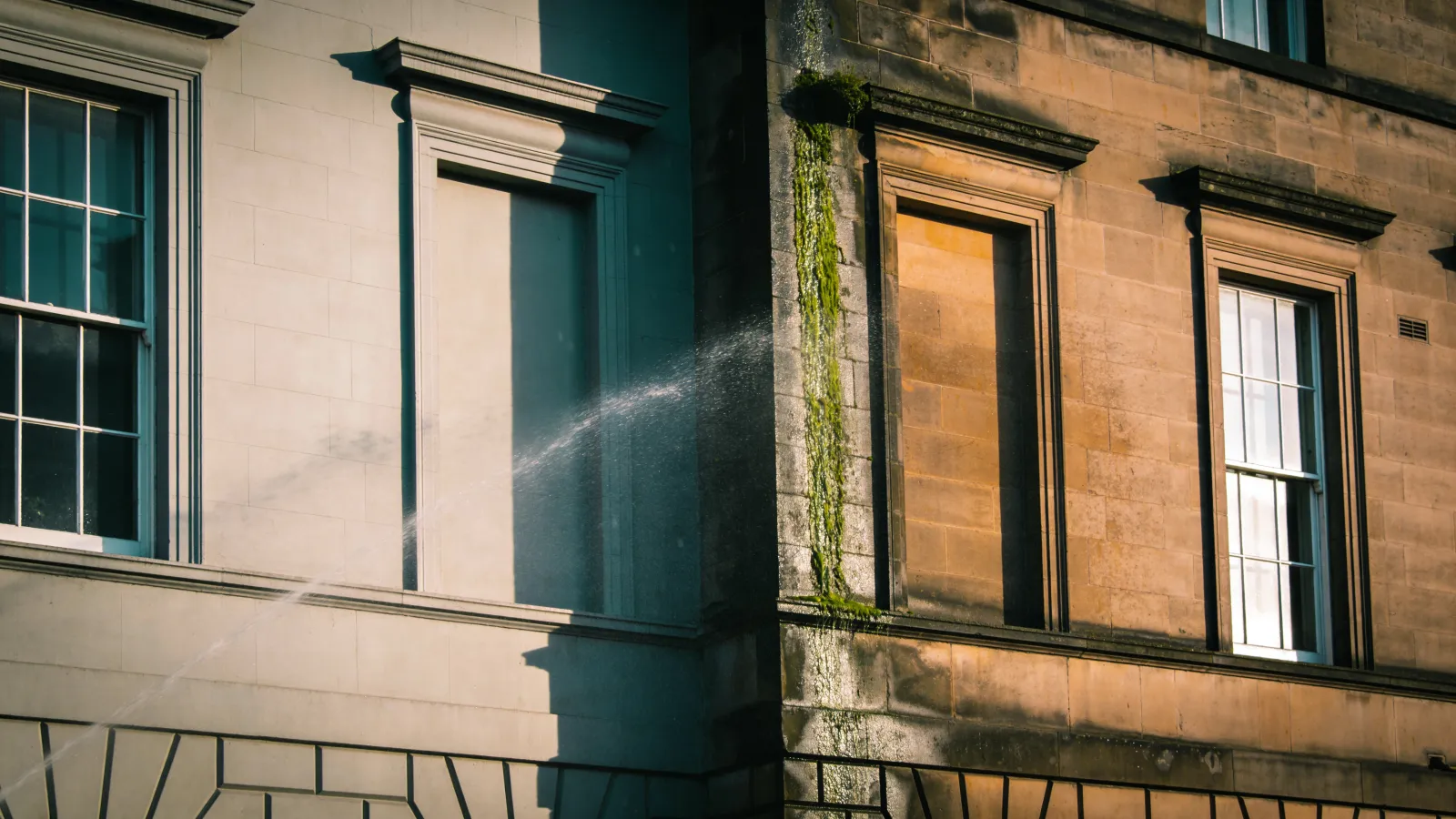
The west of Scotland sees more than 1,500 mm of rain in many areas, and the damp, mild conditions are ideal for biological growth. The green and black staining on cladding is usually algae and lichen feeding on moisture and airborne nutrients. On north and east elevations that get less sun, it takes hold quickest and clears slowest.
Signage suffers differently. UV exposure dulls vinyl and printed graphics, traffic film and salt spray dull the face, and water gets behind poorly sealed letters and lighting. Acrylic and powder-coated aluminium hold up well, but only if the surface contaminants come off regularly. Leave them on, and what looks like fading is often just a film of grime sitting on top of perfectly good material.
What a proper clean can and cannot fix
It helps to be honest about the limits before you spend money.
- Algae, lichen, traffic film, and general grime: these clean off well and the result is dramatic. A composite panel that looked grey-green can come back close to its original colour.
- Light oxidation on powder-coated surfaces: a soft wash with the right detergent restores much of the sheen, though heavily chalked coatings may stay slightly flat.
- Illuminated signage: cleaning the face and diffusers lifts brightness noticeably, but failed LEDs or transformers are a repair job, not a cleaning one.
- Deep UV fade on printed vinyl: cleaning removes the dirt, but pigment that has genuinely bleached will not return. That panel may need a reprint.
- Cracked sealant or water ingress: cleaning reveals these faults rather than fixing them, which is useful, because catching them early avoids bigger costs.
The practical rule: clean first, assess second. A surprising number of "replace it" jobs turn into "clean and reseal" jobs once the dirt is gone.
Method matters more than pressure
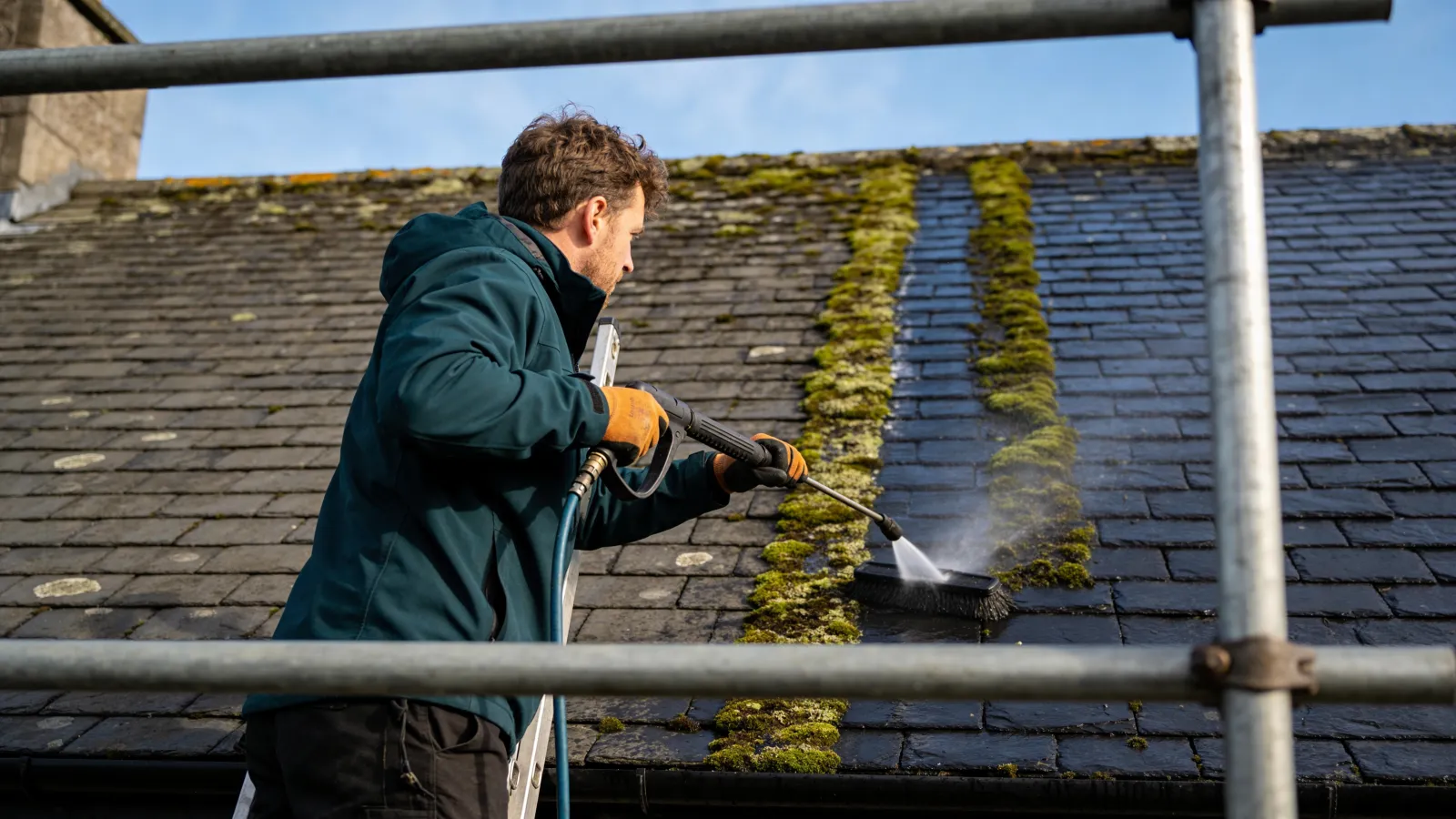
The most common mistake is reaching for a pressure washer on full power. High pressure forces water behind cladding laps and signage trim, damages sealant, and can strip lettering. For most modern cladding and signage, a softer approach works better and is safer:
- Soft washing uses low pressure with a biocidal cleaning solution that kills algae and lichen at the root, so growth stays away for longer rather than returning within months.
- Pure water and telescopic poles let operatives reach signage and high panels from the ground, which cuts the need for access equipment on smaller jobs.
- Correct detergent selection protects composite panels, ACM, render, and powder coating, each of which reacts differently to alkaline or acidic cleaners.
Where access is genuinely high, a mobile elevating work platform or scaffold tower may be needed, and that brings the work under proper height regulations. Any contractor on your site should hold the relevant training and provide a RAMS document before starting. ORVO Group plans access and method around the specific substrate rather than applying one technique to every elevation.
Timing, cost, and keeping it that way
Spring and early summer are the sensible window in Scotland. Cleaning between April and June clears the winter's growth before the busy trading months, and the longer drying days help. A typical retail or trade-counter frontage, including signage and the cladding around it, is often a half-day to a full day of work depending on access.
To keep the result, build cleaning into a cycle rather than waiting for it to look bad again:
- North-facing and shaded cladding: a soft wash every 12 to 18 months.
- Signage faces: an annual clean keeps brightness up and protects the warranty on some illuminated units.
- High-traffic or roadside frontages: consider every 6 to 12 months, as salt and traffic film build quickly.
Booking exterior cleaning alongside gutter clearance and window cleaning in the same visit usually reduces the access cost, since the equipment and team are already on site.
A simple next step
If your signage looks dull or your cladding has gone green, start by getting it cleaned and assessed before assuming it needs replacing. Most of the time the building underneath is in better shape than it looks. To talk through your premises, see our exterior cleaning service or get in touch and we will give you a straight view on what cleaning will achieve and what, if anything, needs more.