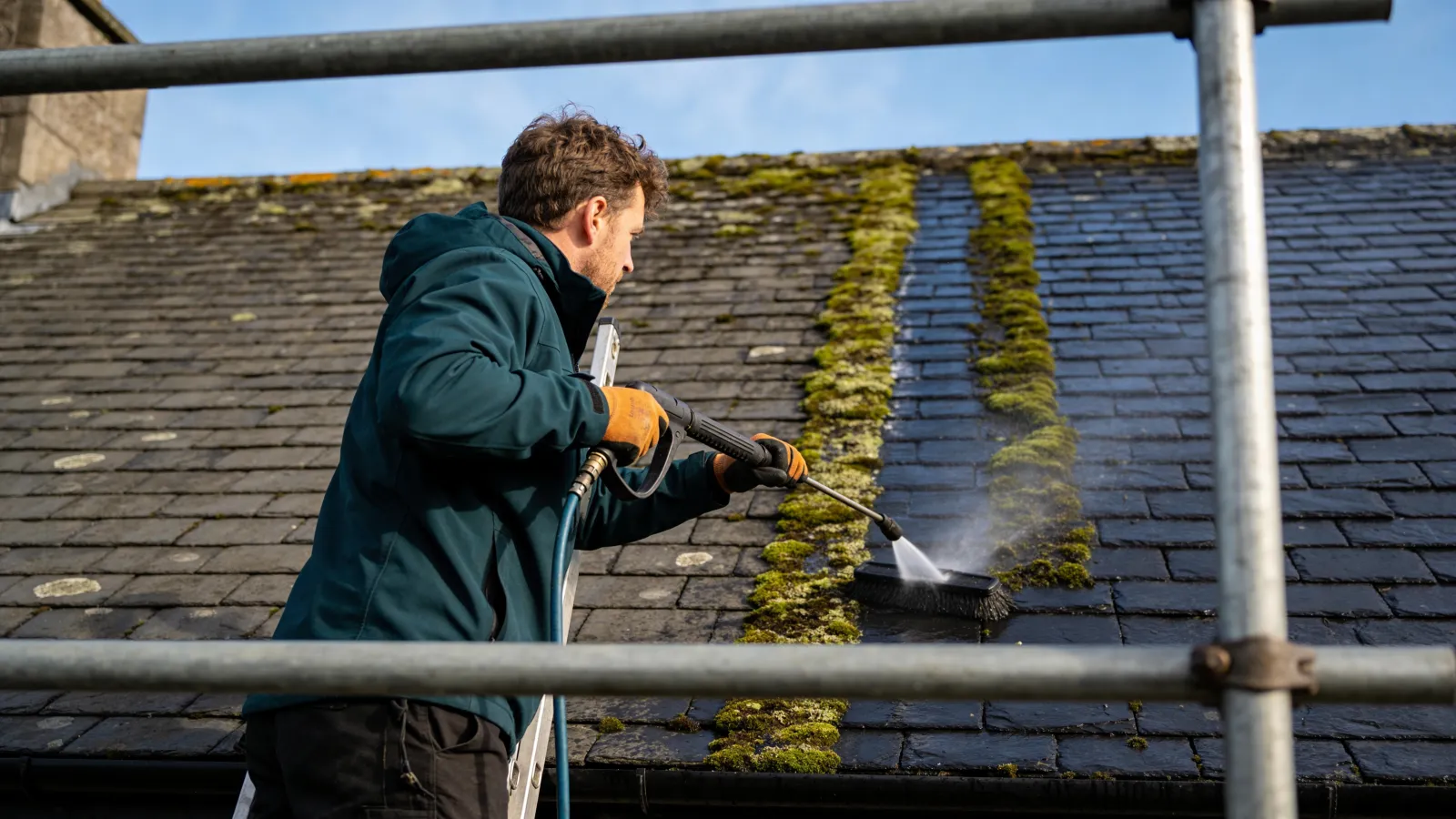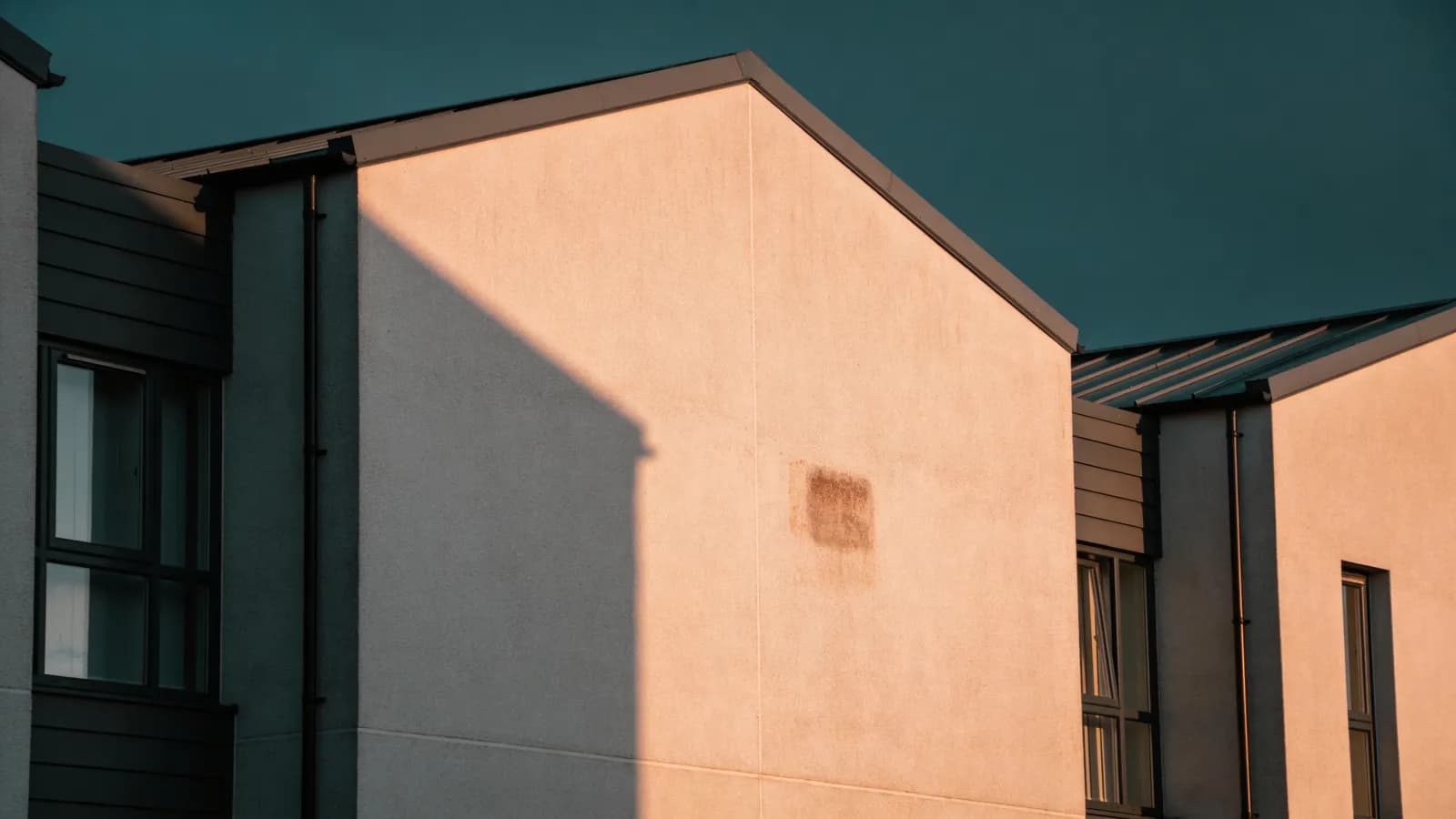
Render gives a building a clean, modern face, but it does not stay that way on its own. In Scotland, the combination of damp air, frequent rain, and long stretches without strong sunshine creates near perfect conditions for algae, lichen, and general grime. The green and black streaks you see creeping across a wall are biological growth feeding on moisture and airborne organic matter. Left alone, that growth holds water against the surface and slowly degrades the finish.
So how often should you actually clean it? The honest answer is that it depends on the render type, the building's exposure, and what you are trying to achieve. Below is a grounded framework you can apply to your own property.
A sensible baseline for Scottish conditions
For most commercial and residential buildings in Scotland, a thorough render clean every two to four years keeps the surface healthy and the appearance consistent. That range covers the majority of properties, but the right interval for your building sits somewhere inside it depending on a few specific factors:
- Orientation: North facing walls get less sun, dry slowly, and grow algae fastest. They often need attention a year sooner than south facing elevations.
- Surroundings: Buildings shaded by trees, sitting near water, or surrounded by other tall structures stay damp longer and discolour faster.
- Render type: Modern silicone and acrylic thin coat renders shed dirt better than older sand and cement or through coloured systems, which tend to hold growth.
- Local climate: A property in rainy Argyll or the west coast will discolour noticeably quicker than one in the drier east around Edinburgh or the Borders.
If your building ticks several of the higher risk boxes, plan for the two year end of the range. If it is well exposed, sunny, and finished in a quality silicone render, you can comfortably stretch toward four years.
What happens if you leave it too long
Putting off a clean does not just look untidy, it costs you. Once algae and lichen establish a firm hold, they trap moisture, and that constant dampness works into the surface. Over time you can see the render itself break down, with patches becoming porous or starting to crack. Lichen in particular roots into the texture and is far harder to remove the longer it sits.
There is also a saturation problem unique to render. A wall that stays wet for weeks loses some of its insulating value and increases the risk of damp issues internally. For commercial property owners and factors managing multiple sites, neglected render is one of the most visible signs of a building that is not being looked after, and it shapes how tenants, customers, and valuers see the asset.
The practical takeaway is simple. A clean carried out every few years is routine maintenance. A clean left for a decade becomes a remediation job, sometimes followed by repair or recoating, which costs several times more.
The right method matters more than frequency
How render is cleaned matters as much as how often. High pressure jet washing might look effective, but on most render systems it strips the surface, forces water behind the finish, and can void manufacturer warranties. The result often looks worse within a year because the damaged surface attracts growth more readily.
The preferred approach is soft washing. This uses low pressure and a specialist biocide that kills algae, lichen, and moss at the root rather than just blasting off the surface layer. Because the treatment kills the growth properly, the wall stays clean far longer, often extending the gap before the next clean. A good soft wash should:
- Kill biological growth at the root, not just the visible surface
- Use low pressure to protect the render and any underlying insulation
- Leave a residual treatment that slows regrowth for months afterward
- Be carried out by operators who understand the specific render system
This is the kind of work where getting it done correctly the first time saves repeated cost. At ORVO Group we use soft washing precisely because it protects the finish and stretches the interval between cleans, rather than creating a problem we have to keep coming back to fix.
Building it into a maintenance plan
The smartest approach is to treat render cleaning as scheduled maintenance rather than a reaction to a wall that has already gone green. Book an inspection every spring, look at the north and shaded elevations first, and clean when growth starts to appear rather than once it has taken over. For multi site portfolios, aligning render cleaning with other exterior work such as gutter clearing and window cleaning keeps disruption and access costs down.
A short annual check costs nothing and tells you whether this is the year to act. Most buildings settle into a predictable rhythm once you have cleaned them properly a couple of times.
Keeping your render in good shape
Clean render protects both the look and the fabric of your building, and in the Scottish climate that means staying ahead of growth rather than chasing it. A realistic plan of every two to four years, adjusted for exposure and render type, keeps most properties in excellent condition.
If you would like a straightforward assessment of your building and a clear interval to work to, take a look at our exterior cleaning service or get in touch and we will talk you through the best approach for your property.