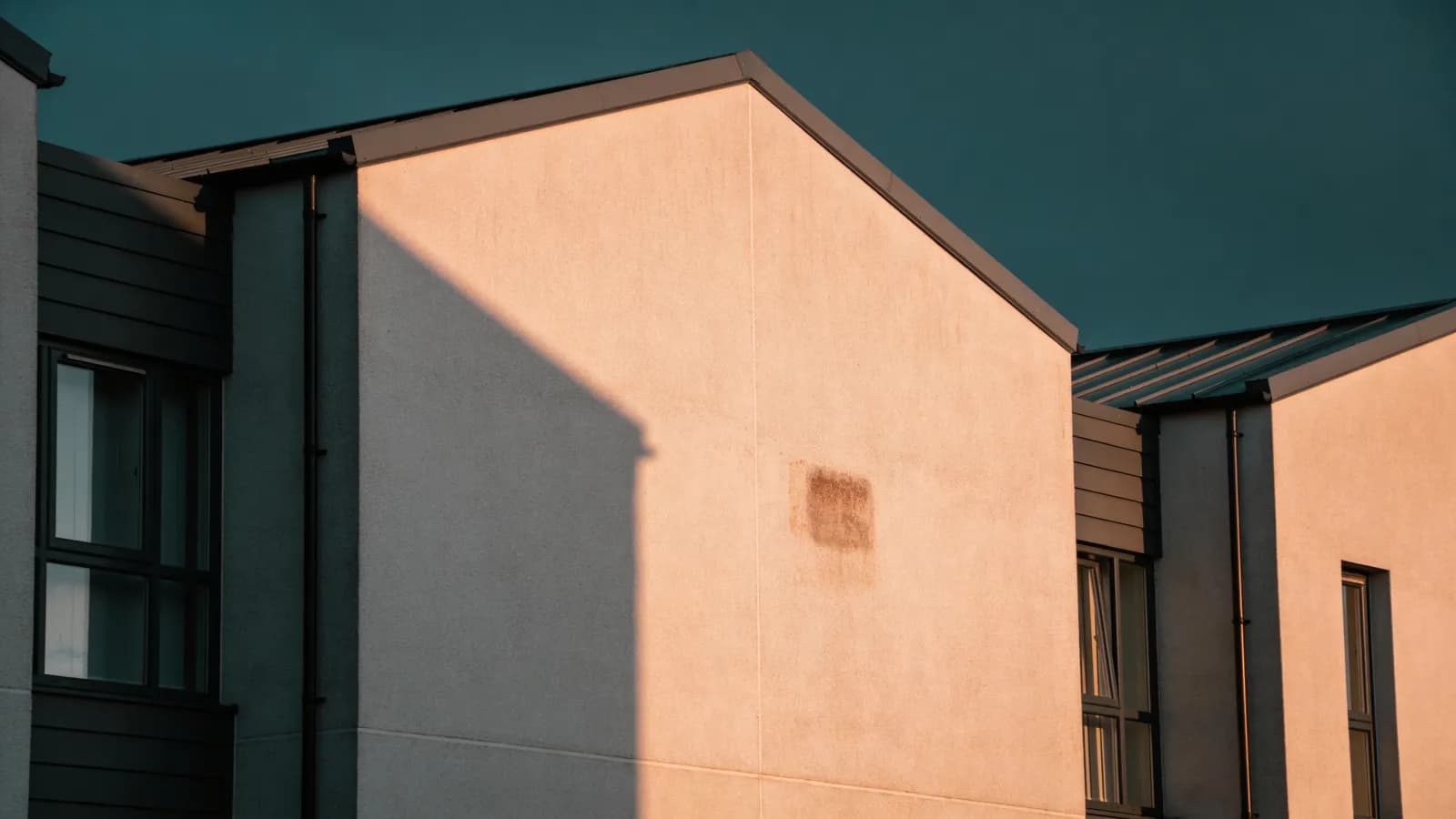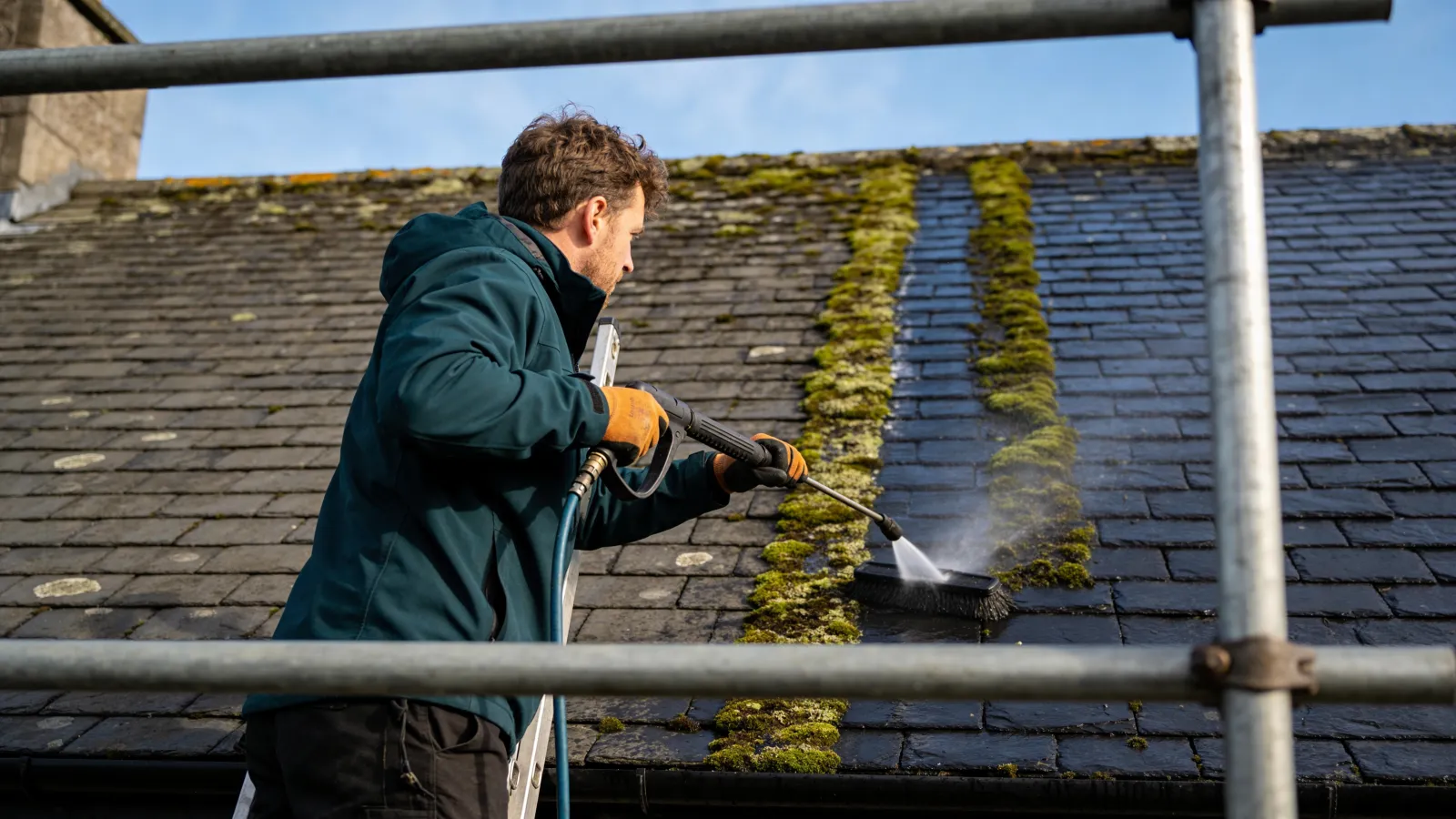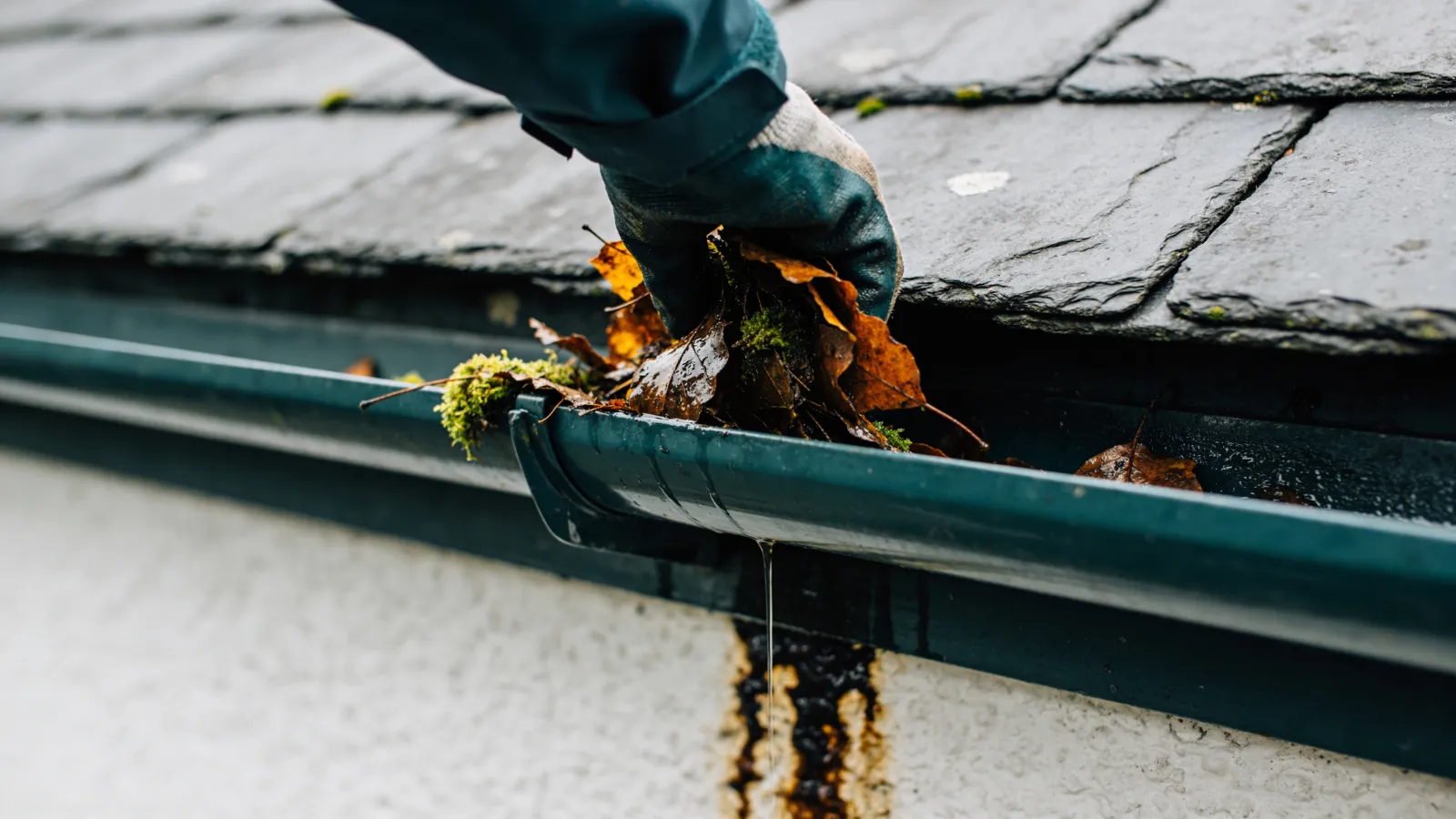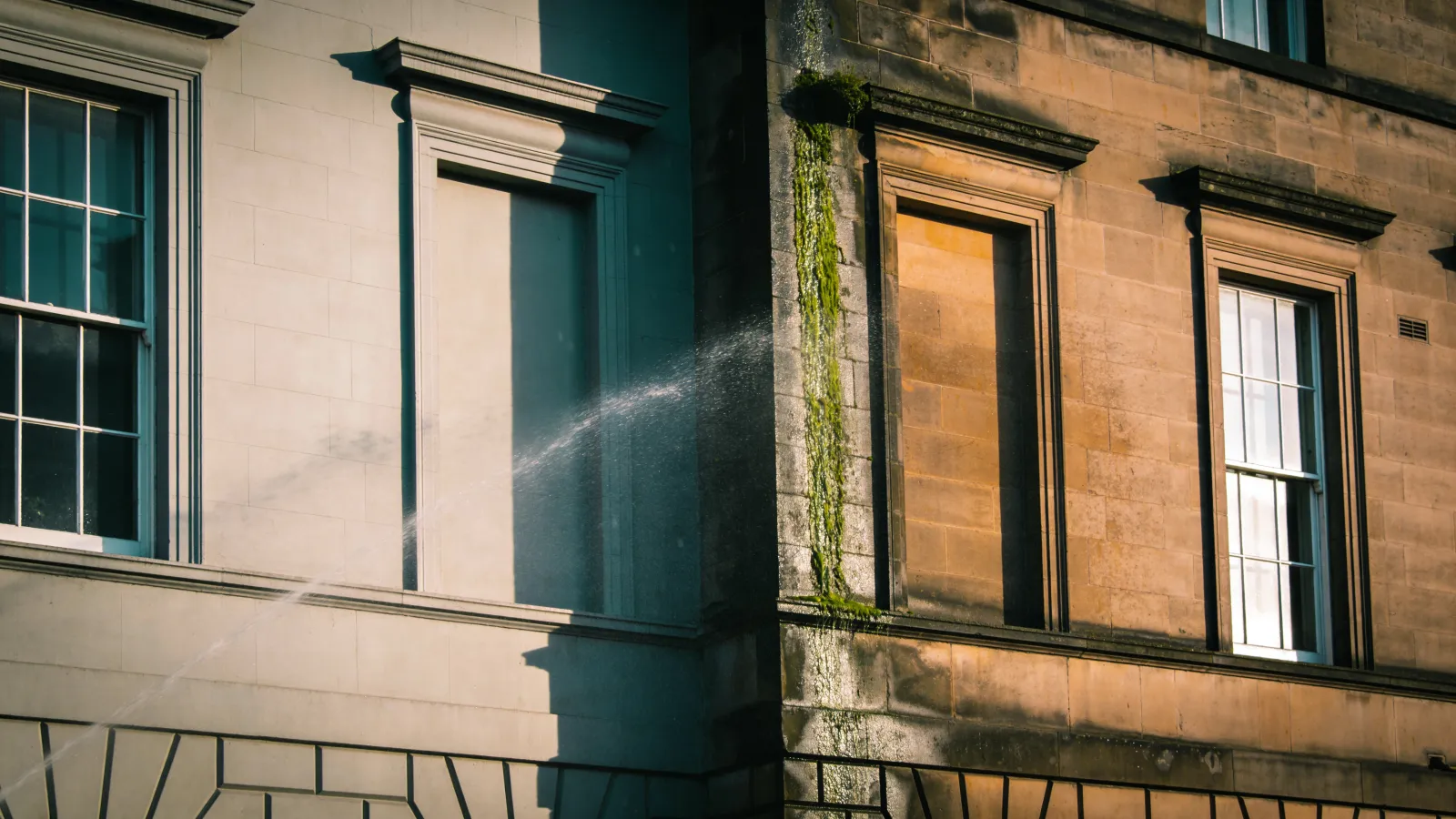
Walk past most commercial buildings in Scotland and you will see the same problem creeping in: green algae on north-facing render, black streaks down a gable, lichen freckling the roof tiles. The damp climate and long, low-light winters give organic growth plenty of time to settle. The question is not whether to clean it off, but how. Choose the wrong method and you can drive water into the fabric of the building, strip protective coatings, or carve lines into soft stone that never come out.
Soft washing and pressure washing are not interchangeable. They suit different surfaces, different types of dirt, and different budgets. Here is how to tell them apart and decide what your building actually needs.
What pressure washing does well
Pressure washing, sometimes called jet washing, blasts water at high pressure, typically between 1,500 and 4,000 PSI for commercial work. That force shifts heavy, ground-in dirt fast. It is the right tool for hard, durable surfaces where the grime is physical rather than biological.
Good candidates for pressure washing include:
- Concrete car parks, loading bays and service yards
- Block paving and tarmac (at moderate pressure, to avoid lifting jointing sand)
- Brick paths and patios with stubborn moss between slabs
- Industrial cladding and metal surfaces that can take the force
- Removing chewing gum, oil stains and tyre marks from hard standing
The catch is that pressure does not discriminate. The same jet that lifts oil off concrete will gouge soft sandstone, force water behind render, blow out lime mortar, and shred timber. On roofs it can crack tiles and break the seal between them. Used carelessly it also just relocates the problem: it removes the visible growth but leaves the spores behind, so the algae returns within months.
What soft washing does well
Soft washing takes the opposite approach. Instead of force, it uses low pressure, barely more than a garden hose, combined with a biocide solution that kills algae, lichen, moss and bacteria at the root. The chemistry does the work, not the water. You apply the solution, let it dwell, then rinse gently. Because the treatment kills the spores, results last far longer, often two to four years rather than a single season.
Soft washing is the safer choice for the surfaces that make up most of a building's visible exterior:
- Painted render, K Rend and monocouche finishes
- Roof tiles, slates and ridge lines
- Sandstone, lime mortar and other soft or historic masonry
- Cladding panels, uPVC, fascias and soffits
- Render on listed or older properties where pressure is a genuine risk
For most Scottish buildings, the green and black staining people want gone is organic. That means soft washing is usually the correct answer for walls and roofs, not pressure washing, even though the high-pressure approach looks more dramatic in the moment.
A simple way to decide
Ask two questions before booking anyone. First, is the surface hard and robust, or soft and porous? Second, is the dirt physical, like oil and grime, or biological, like algae and lichen? Hard surface plus physical dirt points to pressure washing. Soft or coated surface, or biological growth, points to soft washing.
A few practical pointers for facilities managers and property factors:
- Mixed sites usually need both. The yard gets pressure washed; the elevations and roof get soft washed.
- Always check the surface and substrate first. Render over older stone, or a building with failing pointing, can look solid and still be vulnerable.
- Factor in timing. Soft washing needs a dry-ish window for the biocide to dwell, so spring and early autumn tend to work best across most of Scotland.
- Beware quotes that promise to pressure wash everything. It is quicker and cheaper to deliver, but it is often the wrong call for walls and roofs.
- Ask what happens to the runoff. Biocides and dislodged debris need to be managed responsibly, especially near drains and planting.
At ORVO Group we survey the building before recommending a method, because the right answer depends on what we find on site rather than a one-size approach. Getting the diagnosis right protects the fabric of the building and means you are not paying to clean the same wall again next year.
The cost of getting it wrong
The damage from the wrong method is rarely visible on day one. Water forced behind render shows up months later as blown patches and damp inside. Stone scored by a jet stays scored. A cracked roof tile lets water in long before anyone connects it to the clean. These repairs cost far more than the original job, which is the real argument for matching the method to the surface from the start.
Next steps
If you are looking at staining on a building and you are not sure which approach fits, a quick survey will tell you. Take a look at our exterior cleaning service to see how we assess and treat different surfaces, or get in touch and we will advise on the right method for your property before any work begins.