Scotland's damp, mild winters give moss and algae everything they need. North-facing slopes that rarely see direct sun, overhanging trees, and long spells of rain create the ideal nursery on a roof. Left alone, that green and black growth is not just unsightly. It traps moisture against tiles, blocks gutters, and works its way under laps where it can lift and crack the covering. The instinct is to blast it off quickly, but the wrong method does more harm than the moss ever would. This guide explains how to clear it properly and keep it gone.
Why moss and algae are a real problem, not just a cosmetic one
Algae, the thin black or green staining you see on many roofs, is mostly a surface issue. It feeds on moisture and airborne nutrients and rarely threatens the structure on its own. Moss is the bigger concern. It holds water like a sponge, so the tiles beneath it stay wet far longer than they should. Through a Scottish winter that water freezes and thaws repeatedly, and the expansion opens up hairline cracks and weakens the surface of concrete and clay tiles.
The knock-on effects add up:
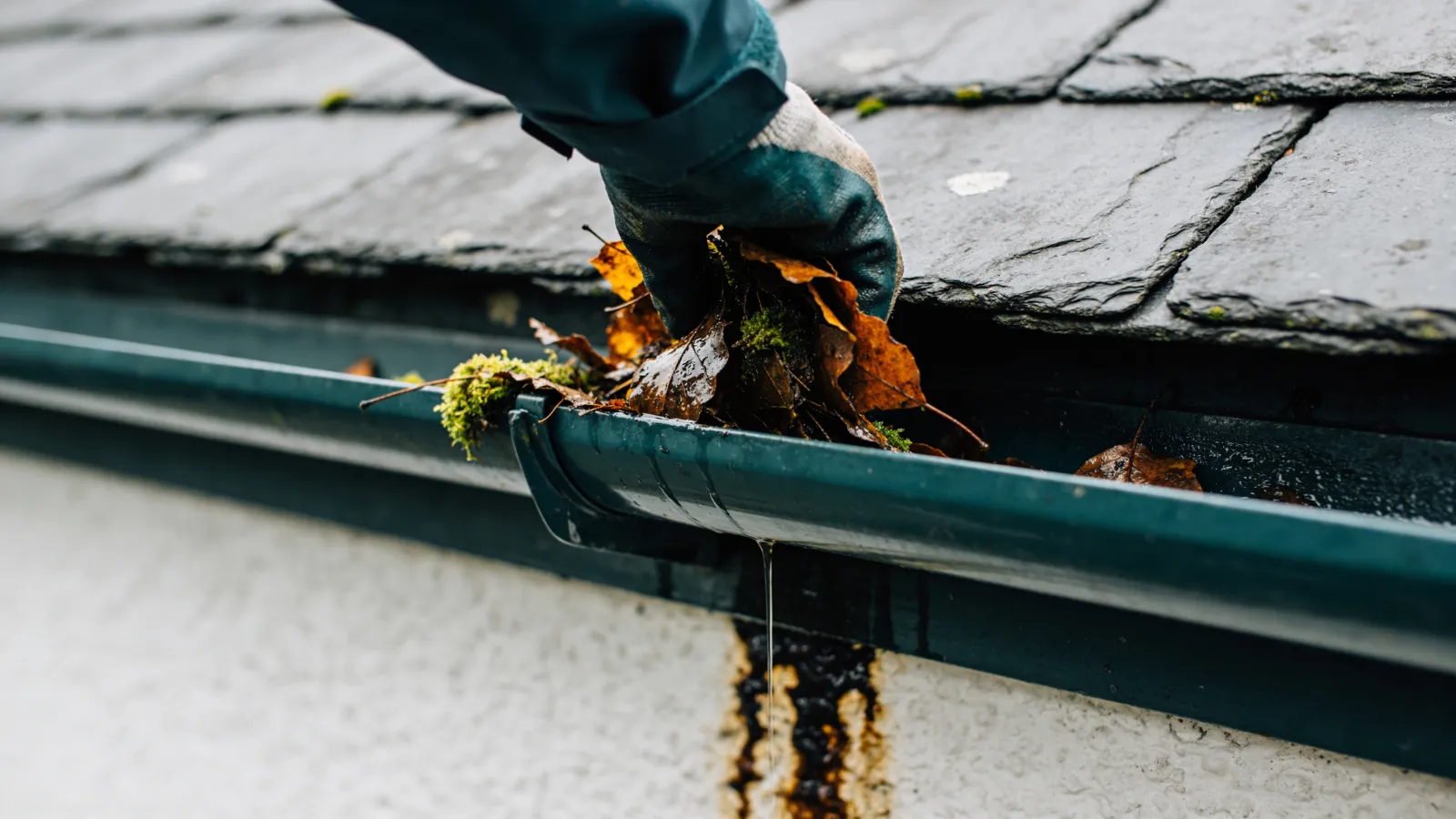
- Moss fragments wash down and clog gutters and downpipes, leading to overflow and damp at the wall.
- Trapped moisture accelerates the breakdown of tile coatings and shortens roof life.
- Wet, mossy slopes are slippery and make any access work more hazardous.
- On flat or low-pitch roofs, standing water and growth can find their way under the membrane.
So clearing it is genuine maintenance, not vanity. The point is to do it without trading one problem for another.
The methods that damage roofs, and the ones that do not
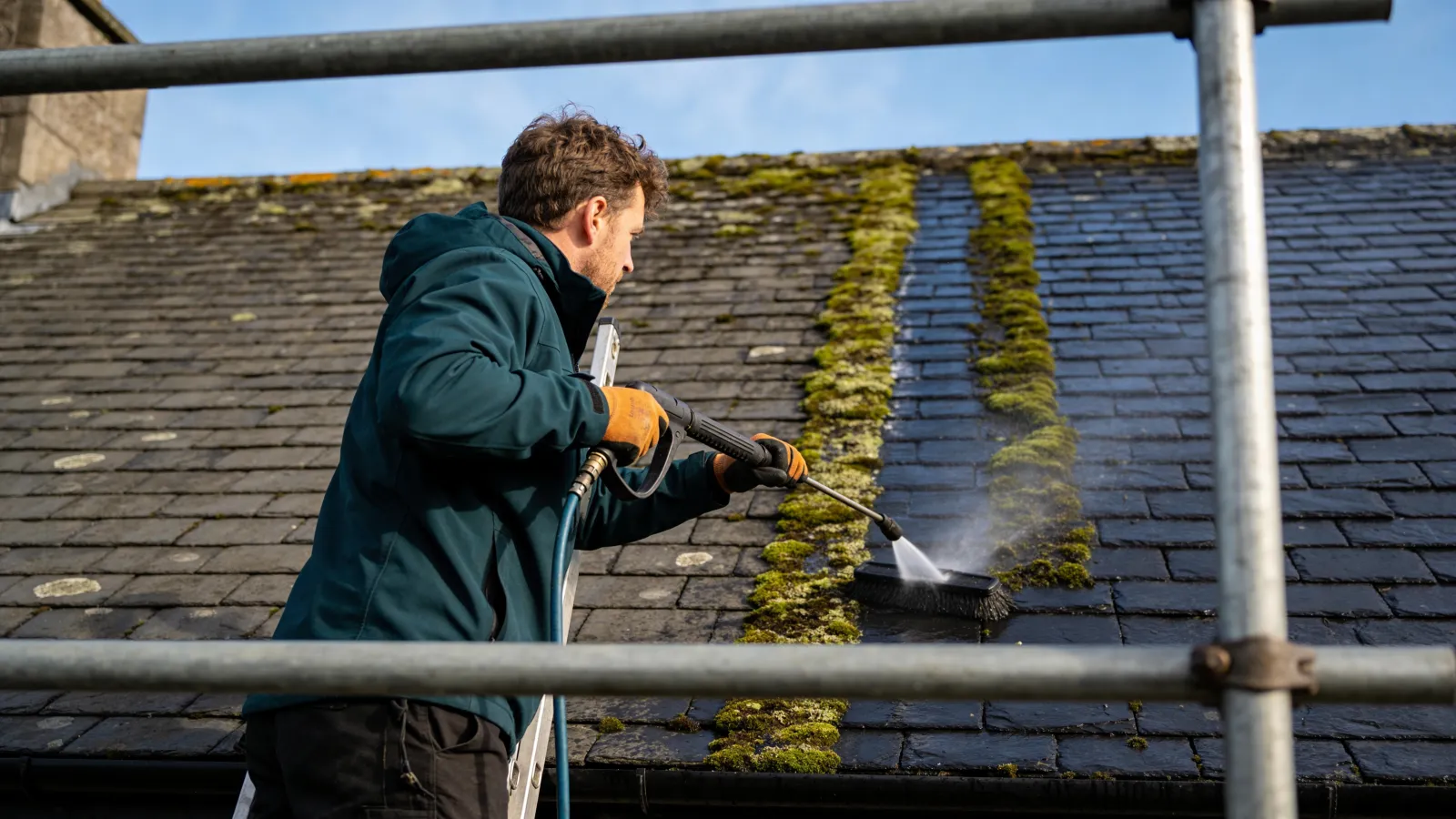
The single biggest mistake is the pressure washer. A high-pressure lance strips the protective granules and coating off concrete and clay tiles, drives water up under the laps, and can crack ageing slate. It might look clean on the day, but you have effectively sanded down the surface and left it rougher, so moss returns faster and the tiles fail sooner. Pressure washing belongs on hard-standing and some render, never on a tiled roof.
The safe approach is patient and mechanical rather than forceful:
- Remove the bulk of the moss by hand or with a stiff brush and a plastic scraper, working from the ridge down so you do not lift the tiles against their lap.
- Use low pressure only, if water is needed at all, and keep the flow running with the fall of the roof.
- Apply a biocide treatment afterwards to kill the spores and the algae the brush leaves behind.
- Clear the gutters of the loosened debris in the same visit so it does not block the drainage.
The biocide is the part most people skip, and it is the part that actually lasts. A good treatment continues working for months and stops the regrowth that brushing alone never prevents.
Choosing the right treatment for the season
Timing matters in Scotland more than most places. Biocides need a dry spell to settle and work, so a forecast of rain within a few hours undoes the application. Late spring and early autumn tend to give the best windows, with milder temperatures and the odd dry day. Avoid treating in frost, and avoid the height of summer if the product needs moisture to spread.
There are two broad approaches. A soft wash applies a diluted biocide across the whole roof and is left to work over weeks, with the dead growth gradually weathering off in the rain. It is gentle and effective but slower to show results. A manual clean plus spot treatment gives an immediate visible improvement and suits roofs where moss is thick enough to block gutters now. Many Scottish roofs benefit from the manual clear first, then a biocide to hold the line. Whichever route you take, choose a product rated safe for the run-off, because most domestic and commercial roofs drain towards planting, drains, or water courses.
Access, safety and when to call a professional
This is genuinely high-risk work. Roofs are slippery when mossy, ladders shift on soft ground, and a fall from height is the most common cause of serious injury in property maintenance. For anything beyond a low single-storey extension you can reach safely, the work needs proper access equipment, a tower or scaffold rather than a leaning ladder, and someone trained to be up there.
For commercial premises, factored blocks, and multi-let buildings, there is also the question of who is accountable if something goes wrong. This is where ORVO Group fits, handling the survey, the safe access, the clean, and the biocide as one job with one point of contact, so a property manager is not coordinating three separate trades. We work across Scotland and treat the roof as part of the whole building, checking gutters and flashings while we are up there.
A sensible cycle for most roofs is a clean and treatment every two to four years, with a quick visual check each spring. That keeps the moss from ever getting thick enough to do real harm, which is far cheaper than replacing cracked tiles later.
Keeping the roof clear for the long term
The aim is not a one-off blitz but a roof that stays manageable. Trim back overhanging branches to let more light and air reach the slope, keep gutters clear so water drains rather than sits, and reapply biocide on a planned cycle rather than waiting for the green to come back. A small amount of regular attention beats a large reactive repair every time.
If you would rather have it surveyed and treated properly, take a look at our exterior cleaning service or get in touch for a straight assessment of what your roof actually needs.