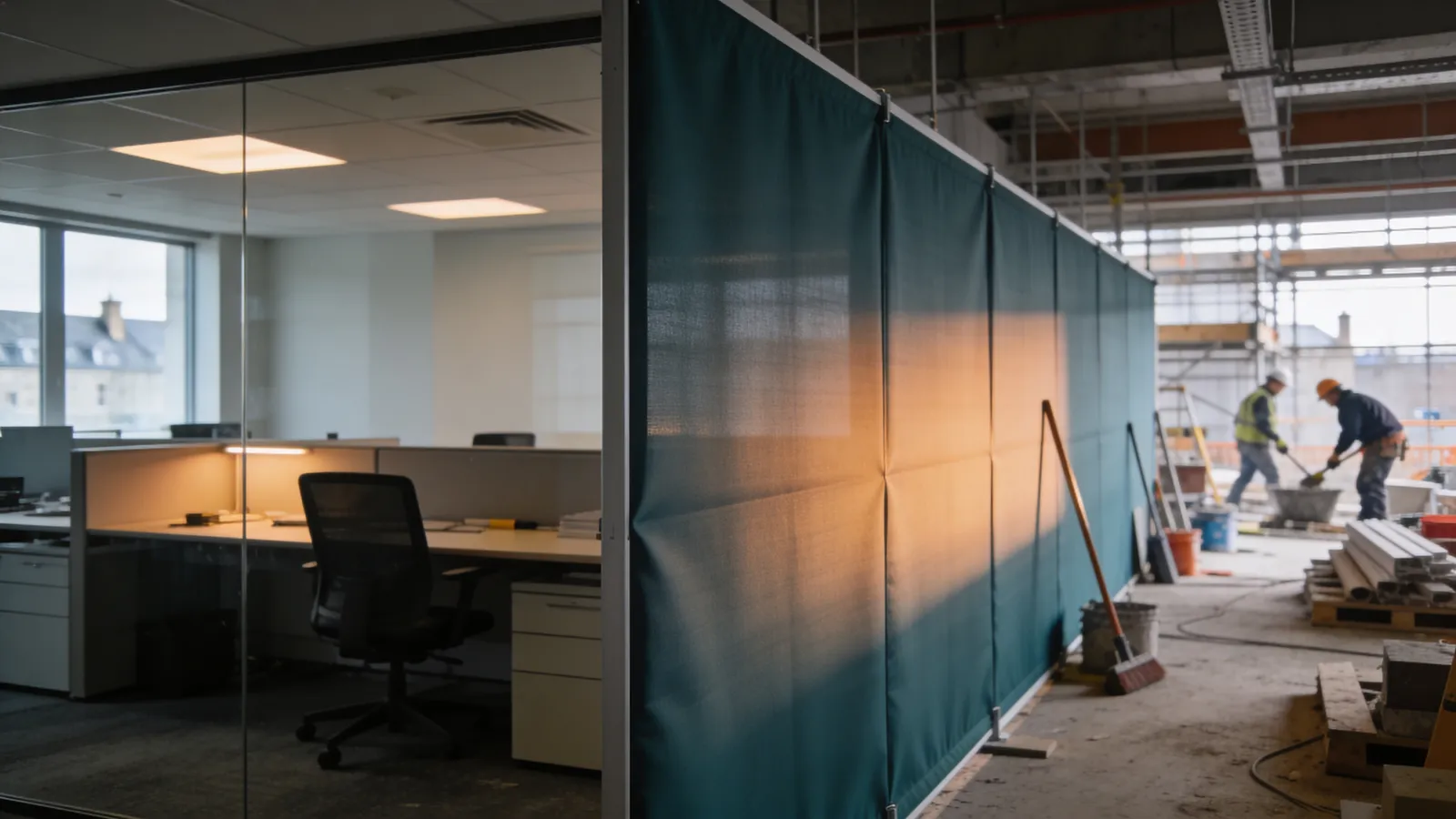
Refurbishing a building while it stays open is a balancing act. You need the trades to crack on, but you also need tenants, staff, and customers to carry on as normal. Temporary screening and dust containment are the tools that make that possible. Done well, they keep dust where the work is, protect the rest of the building, and stop a project becoming a source of complaints. Done badly, or skipped entirely, they create grime, downtime, and arguments about who pays for the clean-up.
This guide explains what these measures actually involve, when you need them, and how to specify them sensibly.
What screening and containment actually mean
The two terms are related but not identical.
Screening is the physical barrier that separates the work area from the occupied space. It can be a temporary stud wall, a proprietary modular panel system, or a heavy-duty polythene curtain on a track. The job is to create a clear, sealed line between "site" and "in use".
Containment is the wider strategy for keeping airborne dust under control. It includes the screening, but also covers floor protection, sealed doorways with zip access, taped joints, and, where needed, air management. On dustier jobs you may also see negative air pressure, where an extraction unit pulls air out of the work zone through a filter so dust moves away from occupied areas rather than drifting into them.
For most fit-out and refurbishment work in Scotland, a sealed screen plus floor protection handles the bulk of the risk. Heavier demolition, plasterboard removal, or anything disturbing old materials needs the full containment approach.
When you need it, and how much it matters
You need proper containment any time work happens near occupied space. Common triggers include:
- Office and retail refurbishments where staff or customers remain on site.
- Common areas in flats, where property factors must protect residents and shared finishes.
- Care homes, schools, and clinics, where dust carries a genuine health and infection-control concern.
- Listed and older buildings, where existing finishes are hard or expensive to replace.
- Any work disturbing materials that may contain asbestos, which is a separate licensed process and must never be improvised.
There is a practical reason to take this seriously beyond tidiness. Fine construction dust is a known respiratory hazard, and silica dust in particular is tightly regulated under the Control of Substances Hazardous to Health rules. Containment is part of how a competent contractor controls that exposure, not an optional extra. It also protects you commercially: a dusty foyer or a coated server room can cost far more to put right than the screening would have cost in the first place.
How a good containment setup is built
A sound setup follows a logical order, and you can use this as a checklist when you review a method statement.
- Define the zone. Mark a clear boundary and keep the screened area as small as the work allows.
- Protect the floor. Use breathable, taped-down sheeting on hard floors and correx board on routes that take foot or trolley traffic.
- Seal the screen. Tape every joint, seal around services, and use proper zip doors rather than loose sheeting that gusts open.
- Manage air where required. Add filtered extraction or negative pressure for heavy dust, and turn off or isolate shared ventilation so dust is not pulled through the system.
- Set entry rules. Tacky mats at exits, agreed access times, and a clear point of contact reduce the chance of dust escaping on boots and trolleys.
- Clean as you go. Daily housekeeping inside the zone keeps the eventual handover quick and predictable.
Timeframes are usually short. A straightforward screen for a single room or corridor can go up in a day, and modular systems come down cleanly without marking ceilings or walls. The planning, agreeing access windows, and protecting the right routes, takes more thought than the build itself.
Getting screening to fit a live building
The hardest part is rarely the materials. It is keeping the building usable while the work proceeds. That means thinking about fire escape routes, which must stay clear and signed at all times, and about access for deliveries, cleaners, and any out-of-hours activity. In a multi-let building, the factor or managing agent needs to know what is sealed off and when.
This is where having one accountable partner earns its keep. At ORVO Group we coordinate the screening, the protection, and the ongoing cleaning around your occupiers, so you are not chasing three different trades to find out why a fire door is taped up or a corridor is blocked. One point of contact, one plan, one set of answers.
Bringing it together
Temporary screening and dust containment are simple ideas that reward careful execution. Define the zone, seal it properly, manage the air when the work demands it, and keep the rest of the building clean and open throughout. Get those basics right and a disruptive job becomes a quiet one.
If you are planning work in an occupied building and want it handled without the dust and the disruption, take a look at our construction support service or get in touch to talk through your site.