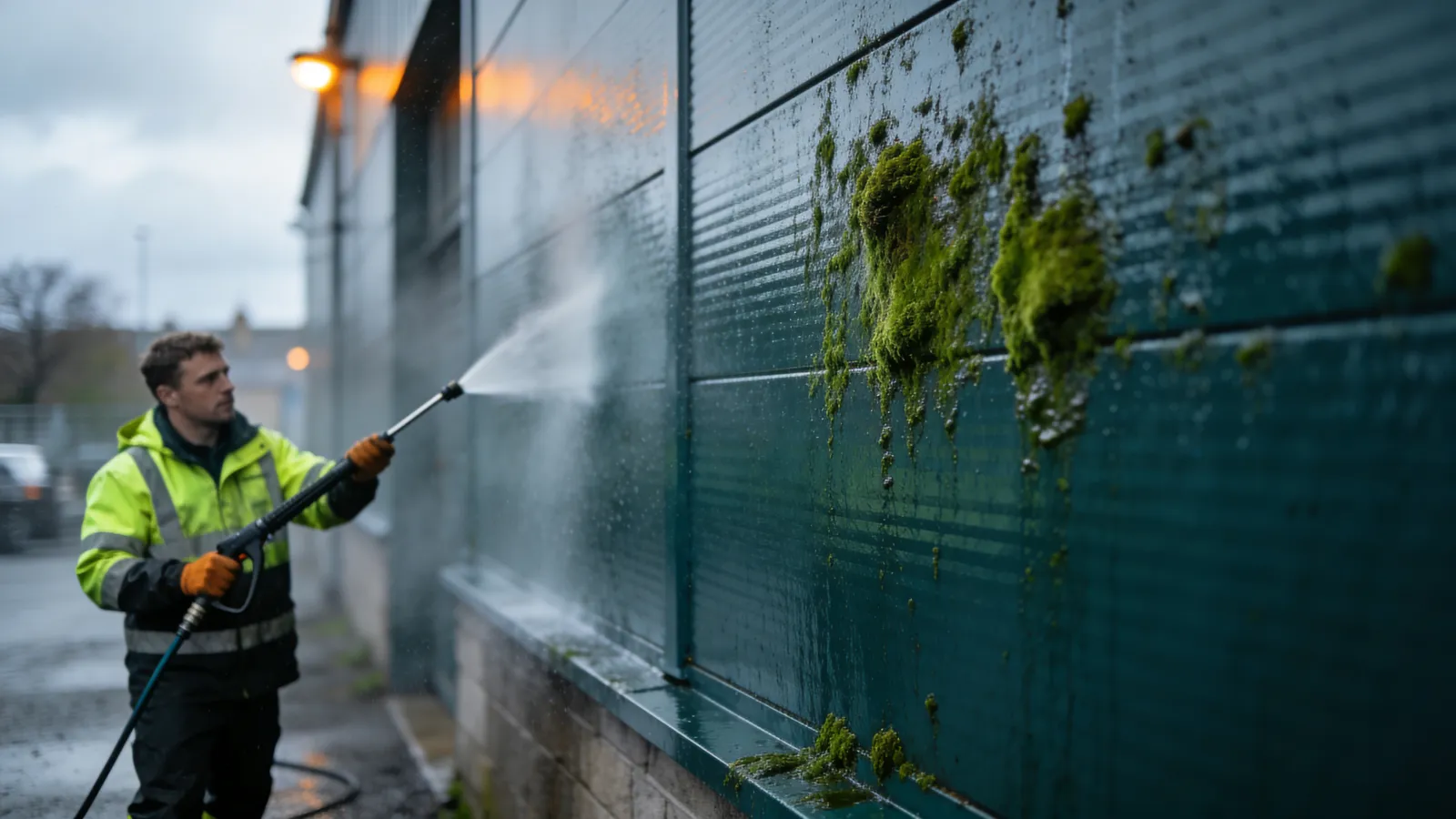
Scotland's storm season runs roughly from late September through to March, and the Met Office now names storms as early as the start of September. The Atlantic does not give much notice. A named storm can move from a quiet forecast to gusts over 70mph in under 48 hours, which is rarely enough time to organise scaffold access, source materials, or book a roofer who is already fully committed elsewhere. The work that protects your building has to happen before the wind arrives, not during it.
For commercial property, the cost of getting caught out is not just the repair. It is the closed unit, the cancelled trading day, the insurance excess, and the liability if loose material injures someone or damages a neighbouring property. The good news is that most storm damage to commercial exteriors is predictable, and most of it is preventable with a sensible autumn programme.
Start with water, because water finds the weak point
The single most common cause of storm damage is not wind lifting a roof. It is water getting in through a gap that was already there and being driven further by the wind. Blocked gutters and downpipes are the usual culprits. Through autumn, leaves, moss, and grit build up fast, and a gutter that overflows during heavy rain sends water down the wall, into cavity walls, and behind cladding.
Book a gutter and downpipe clear before the leaves fully drop, ideally mid to late October, and a second check after the first big fall. While the access equipment is up there, get the operative to photograph the roof line, flashings, and any visible felt or membrane. A ten minute look from a cherry picker often catches a slipped tile or a lifted flashing that would otherwise become a winter leak.
Pay particular attention to flat roofs, which are common on industrial units and retail parks. Standing water, blistered membrane, and blocked outlets are all early warnings. A flat roof outlet that backs up in a storm can put several inches of water on the roof in an hour.
Walk the perimeter and look up
Most facilities managers inspect at eye level. Storm risk lives above your head and at the edges of the site. Walk the full perimeter of each building before the season starts and look for the things wind turns into projectiles or entry points.
- Loose or rusted fixings on signage, fascia panels, and cladding
- Tiles, slates, and ridge tiles that have slipped or cracked
- Lifted or peeling flat roof membrane, especially at edges and upstands
- Failing mastic and sealant around windows, doors, and roof penetrations
- Dead or split branches on trees near the building, car park, or boundary
- Aerials, satellite dishes, and old redundant fixings that nobody owns
- Bin stores, gates, and fencing that could blow into vehicles or glazing
Write down what you find with a photo and a location. That list becomes your pre season work order, and it gives you a clear before and after record if you ever need to make an insurance claim.
Secure the loose and the heavy
Anything not fixed down will move in a 60mph gust. Bins, A boards, planters, outdoor furniture, stacked pallets, and waste skips all need a plan. Agree with staff where movable items get stored when a storm is named, and make it someone's job to actually do it. A wheelie bin through a shopfront is an expensive and entirely avoidable claim.
Outdoor signage deserves separate attention. Totem signs, projecting signs, and large fascia letters carry real wind load. If a fixing is corroded, it will not announce itself before it fails. Have signage fixings checked properly, not just glanced at, every couple of years.
Car parks and external lighting also matter. Clear drainage gullies so surface water does not pond and freeze, and check that column lighting is structurally sound. A leaning lighting column is both a hazard and a sign of foundation movement.
Have a plan for when the warning comes
Even a well prepared building benefits from a short, written storm procedure. Keep it to one page: who checks the forecast, who secures loose items, who holds keys, and which contractor to call if something fails out of hours. Share it with tenants and staff before September, not during the first amber warning.
Keep a small emergency kit on site too: heavy duty tarpaulin, sandbags or flood socks for vulnerable thresholds, a wet vacuum, and the contact details for your maintenance partner. Having one accountable contact who already knows your building saves real time when the phone lines are busy and every other property is calling at once.
Get ahead of it
Storm preparation is unglamorous and easy to defer, right up until the night it is not. A planned autumn round of gutter clearing, roof checks, and perimeter fixing costs a fraction of a reactive emergency callout, and it keeps your building open and trading through the worst of the weather.
ORVO Group handles this kind of seasonal preparation across Scotland, with one point of contact for the whole property. If you would like a pre season exterior check, take a look at our seasonal service or get in touch to arrange a walk round before the first named storm.