Scotland gives buildings a hard time. Annual rainfall in the west can pass 2,000mm, humidity stays high for long stretches, and many days simply never dry out. That combination feeds two persistent problems for property owners: damp inside the building and algae, lichen and moss across external surfaces. Left alone, both shorten the life of a building and push up repair costs. The good news is that almost all of it is preventable with timely, methodical maintenance.
This is a seasonal issue, but in Scotland the season is long. Algae growth peaks in the cool, wet months from October through March, while internal condensation problems often worsen once heating goes on and windows stay shut. Treating these problems as one connected maintenance task, rather than a series of emergencies, is the difference between a tidy budget and a recurring bill.
Why Scottish buildings struggle
Three factors do most of the damage. Persistent moisture keeps surfaces wet long enough for biological growth to take hold. Low winter sunlight means north-facing and shaded elevations rarely dry, so they grow the thickest algae. And older Scottish building stock, with solid stone walls, lime mortar and limited cavity insulation, behaves differently from modern construction and needs breathable, sympathetic treatment rather than sealed-in fixes.
Get the diagnosis wrong and you make things worse. Painting a waterproof membrane over a damp solid wall traps moisture and accelerates decay. The first job is always to identify the source: penetrating damp from a failed gutter or pointing, rising damp from a bridged or absent damp-proof course, or condensation from poor ventilation. Each has a different cure.
External algae, moss and lichen
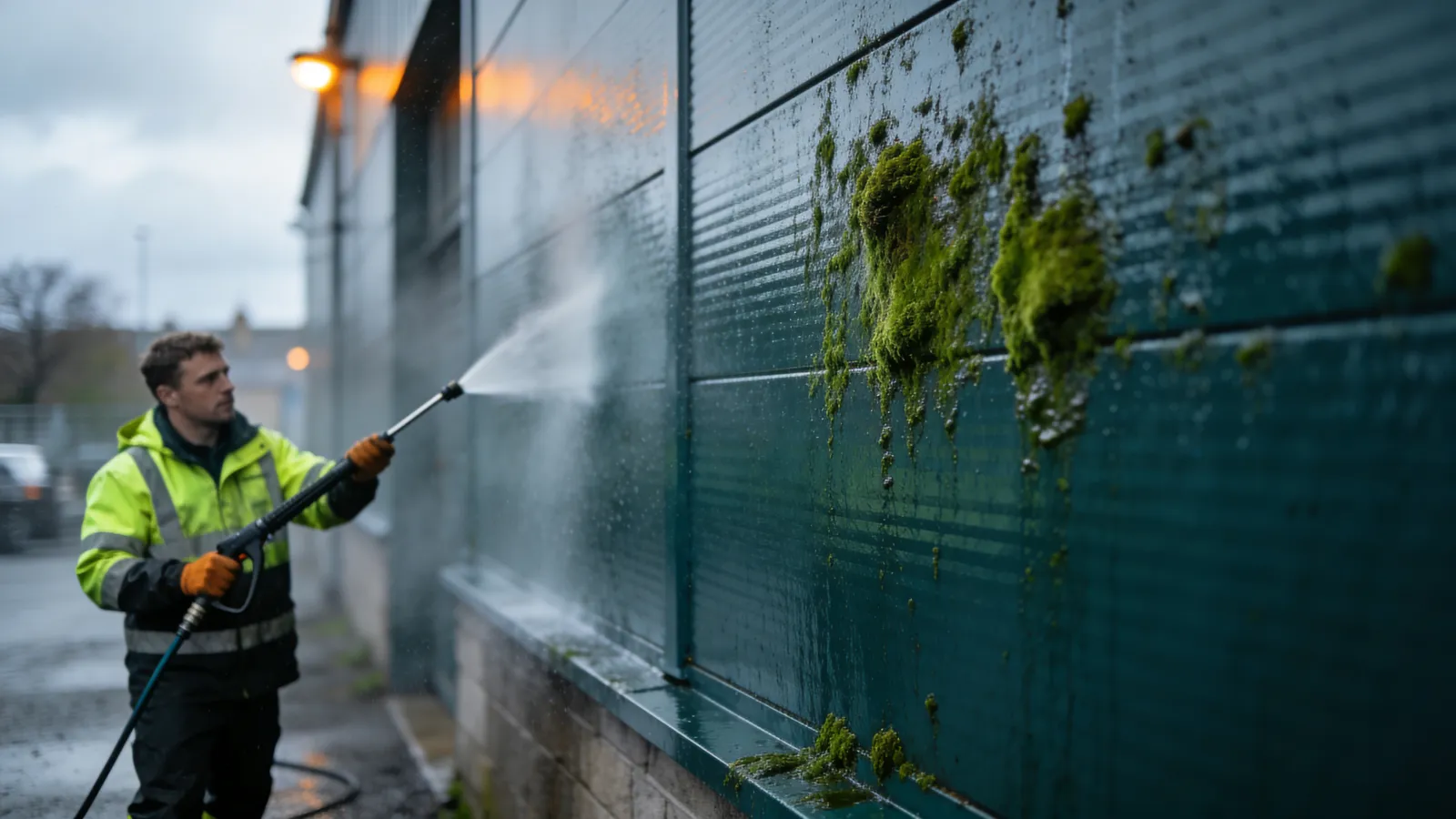
The green and black staining you see on render, roof tiles, paving and signage is mostly algae, with moss and lichen on rougher surfaces. It is not just cosmetic. Moss on a roof lifts and holds water against tiles, blocks valleys and gutters, and adds weight. Algae on paths and ramps is a genuine slip hazard, and a liability concern for any commercial property with public footfall.
Sensible measures that work:
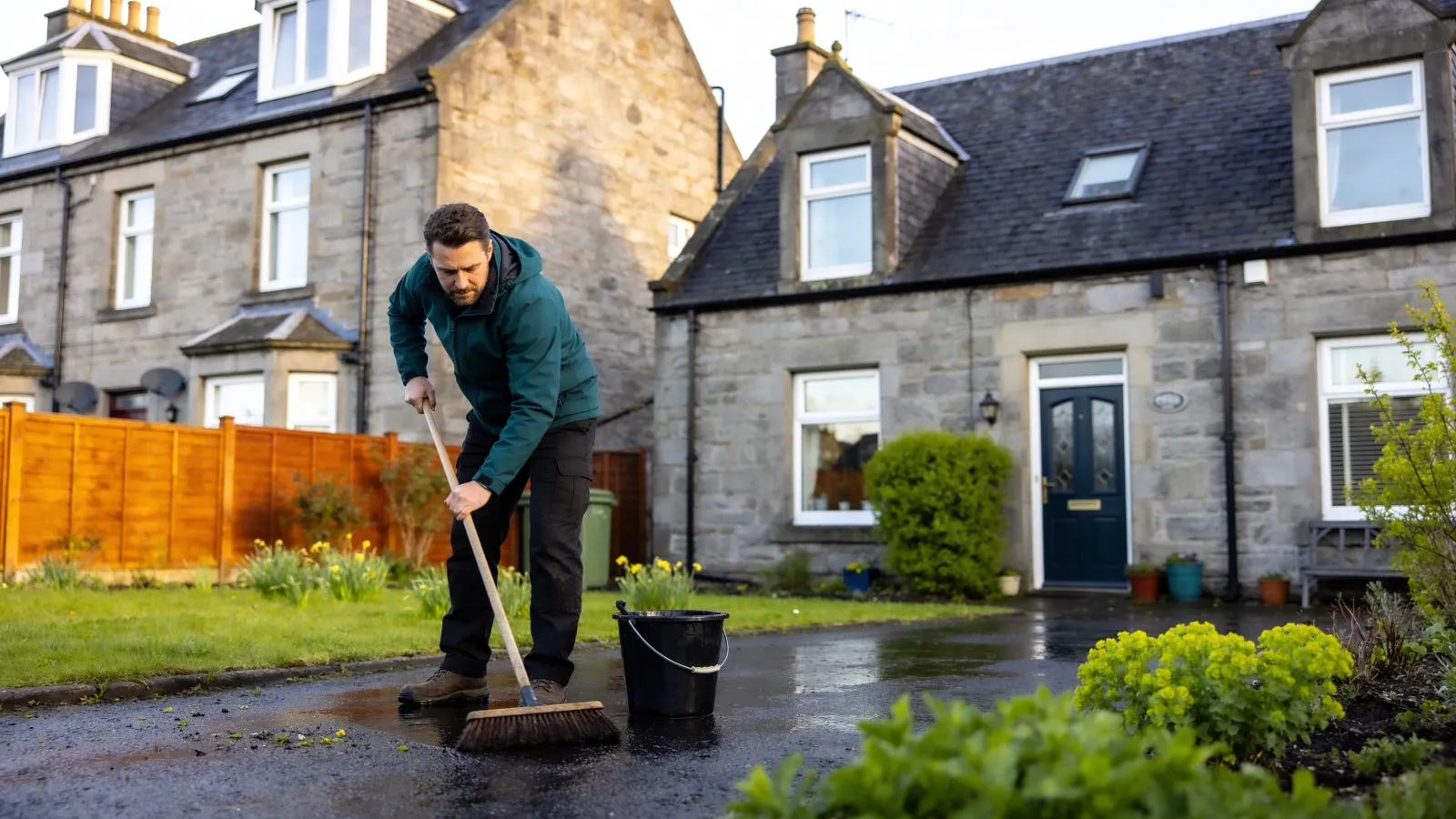
- Clear gutters and downpipes at least twice a year, in late autumn and again in spring, so water is not constantly spilling down walls.
- Soft wash rather than aggressive jet washing on render and roofs. High-pressure water strips coatings, drives moisture into the substrate and can crack tiles.
- Use a biocidal treatment that kills spores at the root, then allow it to work over several weeks rather than expecting an instant result.
- Cut back overhanging trees and shrubs to let air and light reach shaded elevations.
- Keep a close eye on north-facing walls, shaded car parks and anything under tree cover, as these regrow fastest.
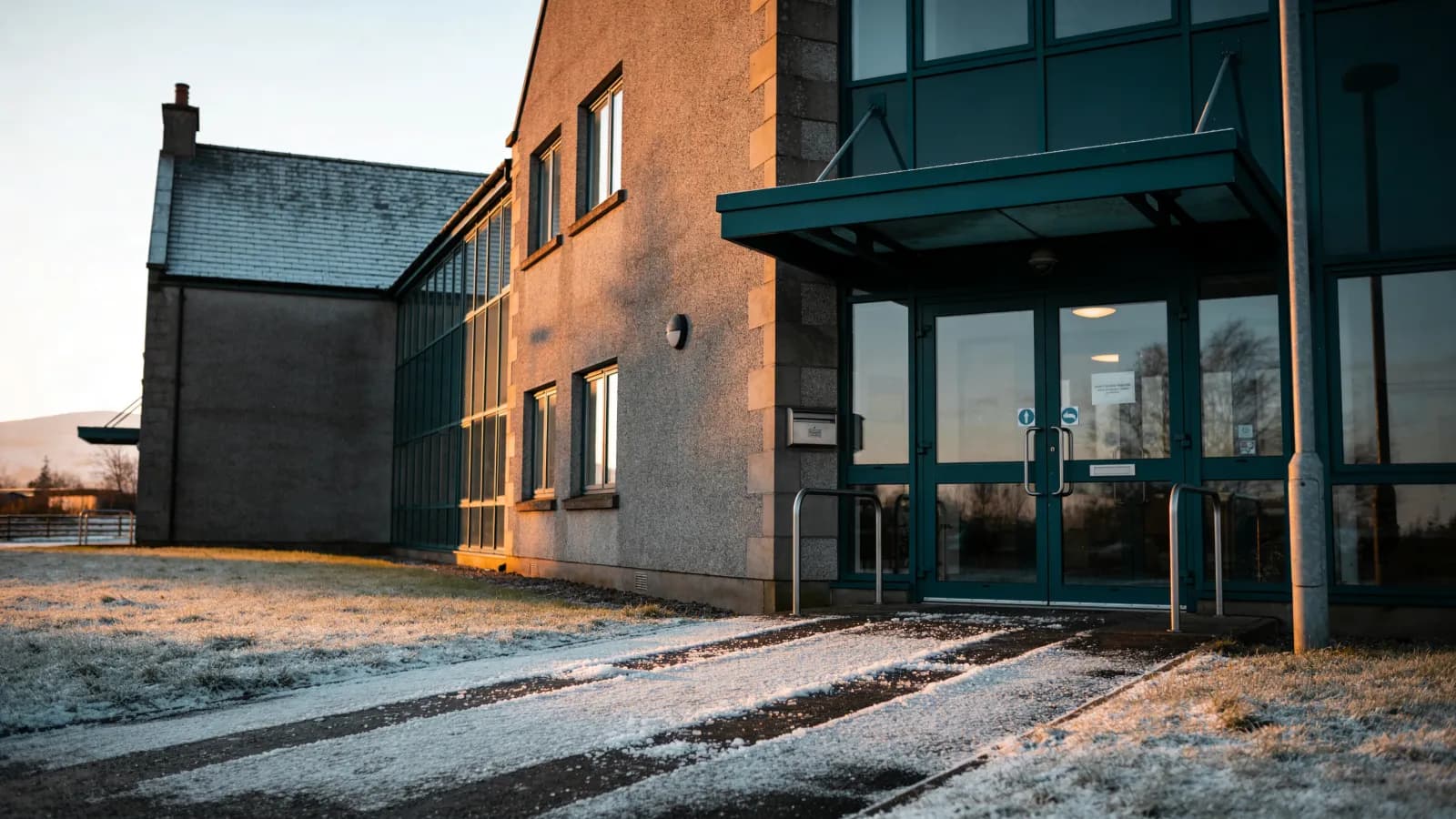
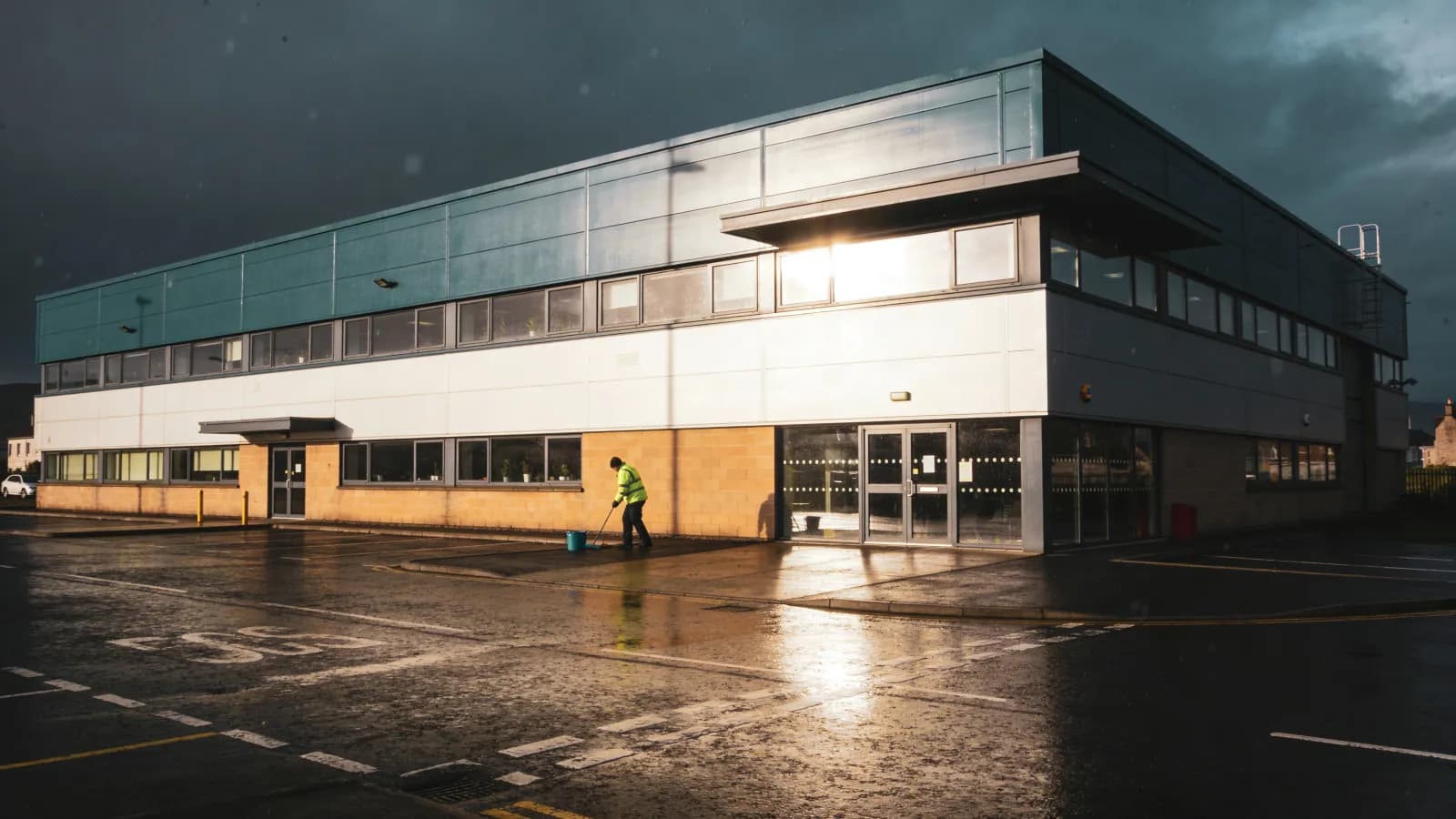
For commercial sites, treating slip-prone paving and entrances should sit in the same schedule as a winter gritting plan. The two risks arrive together.
Internal damp and condensation
Inside, the most common culprit is condensation, not a structural fault. Warm, moist air from kitchens, bathrooms and people meets cold surfaces such as window reveals, external corners and behind furniture, and water settles. Black spot mould follows within days once relative humidity sits above roughly 70 percent at the surface.
The fixes are practical and undramatic. Improve extraction in wet rooms and check that existing fans actually move air. Keep trickle vents open. Maintain a steady background temperature rather than short, sharp bursts of heat, which leaves walls cold. Where a building genuinely cannot ventilate enough, positive input ventilation or a dehumidifier can break the cycle.
If damp is patchy, tide-marked or tied to a specific wall after rain, suspect penetrating or rising damp instead, and trace the water. A cracked render panel, a slipped tile, perished pointing or a blocked cavity will keep feeding moisture no matter how much you clean off the mould. Fixing the fabric is the only durable answer.
A few timeframes worth holding in mind: clear visible mould within a week of spotting it to stop spores spreading, re-treat external algae roughly once a year on shaded elevations, and inspect roofs and rainwater goods every six months. Catching a blocked downpipe in October is cheap. Repairing a saturated wall in February is not.
A planned approach pays off
Damp and algae reward routine and punish neglect. A short maintenance calendar, tied to the Scottish seasons, will keep most problems from ever becoming structural. At ORVO Group we fold external cleaning, gutter clearance, roof checks and internal damp inspections into one schedule, so issues are caught on a planned visit rather than after they cause damage. One point of contact, one accountable partner, covers the whole property rather than leaving owners to juggle separate trades.
If your building has shaded elevations, ageing render or rooms that never quite dry out, now is the time to plan ahead of the wet season rather than react to it. Take a look at our seasonal service to see how regular treatment and inspection fit together, or get in touch for a straightforward assessment of your property.